 EN
EN
The Strategic Role of Compact Heat Exchangers in DMC Plant Optimization
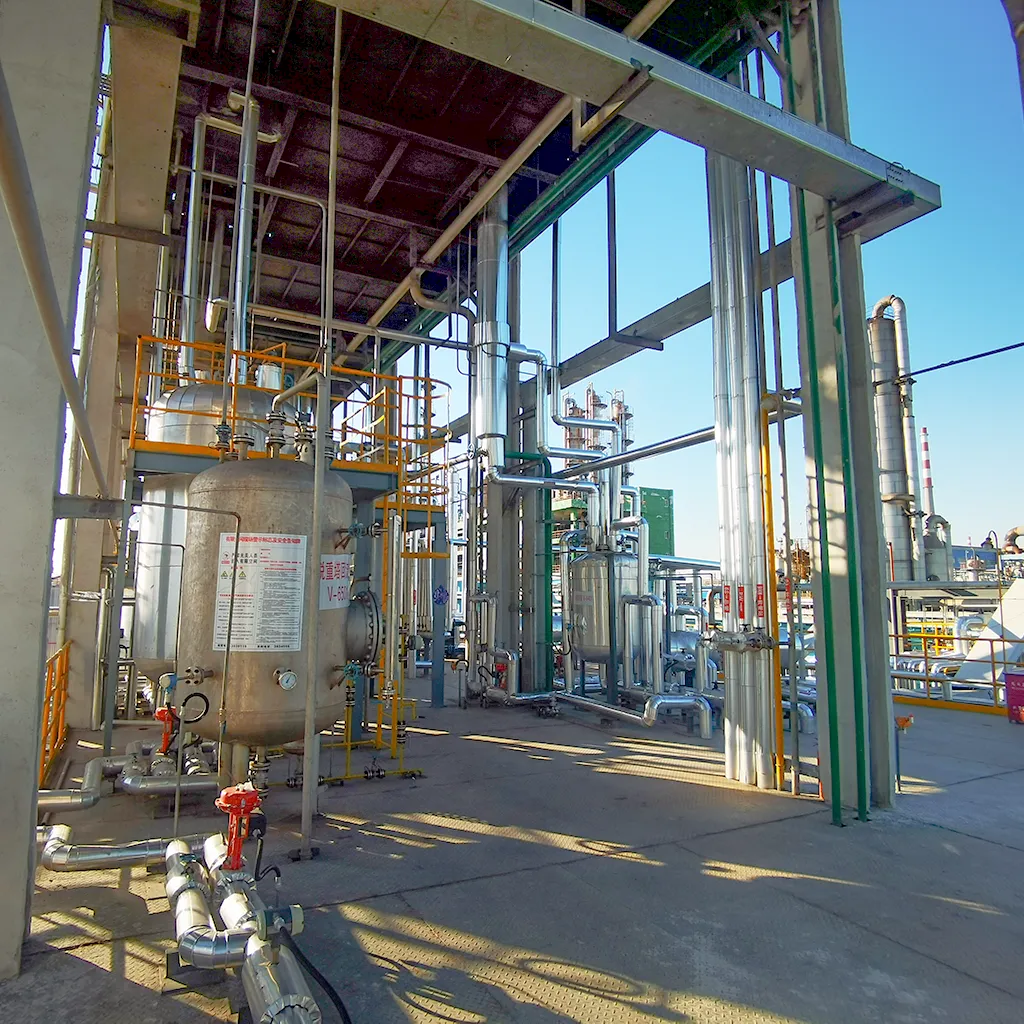
Efficiency is the absolute heartbeat of any successful Dimethyl Carbonate (DMC) production facility in today’s highly competitive chemical landscape. As global industrial demand for high-performance solvents, sustainable battery electrolytes, and polycarbonate precursors continues to skyrocket, plant operators and engineering managers are facing unprecedented pressure to maximize throughput while simultaneously minimizing energy overhead. Traditional shell-and-tube heat exchangers, while reliable in historical contexts, often occupy massive footprints, suffer from significant thermal inefficiencies, and struggle to provide the granular control required for modern, high-intensity DMC synthesis processes. This is where the adoption of advanced compact heat exchange technology is fundamentally shifting the economic and operational landscape of modern chemical manufacturing, offering a pathway toward true plant optimization.
Engineering Excellence Through Advanced Thermal Management
The successful synthesis of DMC relies heavily on extremely precise temperature control, particularly during critical phases such as reactor feed preheating, distillation column reboiling, and purification cycles. Based on extensive field experience and deep engagement in the chemical engineering sector, the strategic shift toward compact heat exchangers is not merely about space-saving—it is fundamentally about achieving superior heat transfer coefficients. These high-efficiency units leverage sophisticated plate-fin, micro-channel, or printed-circuit designs to facilitate rapid, uniform heat exchange within a significantly reduced volume compared to traditional counterparts. By achieving closer temperature approaches (often within 1–3 degrees), these units allow for greater recovery of high-grade process heat that would otherwise be wasted. This capability directly translates into significantly reduced steam consumption, lower utility costs, and a more streamlined thermal profile for the entire production loop, ensuring that every kilowatt of energy is utilized to its maximum potential.
Enhancing Operational Stability and Process Safety
In the high-stakes, high-pressure environment of large-scale chemical processing, equipment reliability is a non-negotiable metric. Compact heat exchangers offer a uniquely robust solution to thermal fatigue—a chronic and costly issue often encountered in standard shell-and-tube units during the frequent startup, shutdown, and load-swing sequences typical of modern DMC plants. Because of their refined design, their smaller internal volume significantly reduces the overall "holdup" of hazardous or volatile process fluids. This reduction in fluid inventory inherently increases the safety margin of the entire production facility, lowering potential environmental and operational risks. Furthermore, from a maintenance and lifecycle perspective, the simplified, modular nature of these systems often leads to faster inspection and cleaning cycles. By minimizing the complexity of the heat exchange train, operators can ensure that unplanned downtime remains a rarity rather than a recurring risk factor, thereby protecting the plant's production schedule and bottom line.
Translating Technical Efficiency into Bottom-Line Value
Investment in modern, compact heat exchange technology is a direct, data-driven play for long-term profitability. A well-optimized thermal loop does far more than just reduce monthly energy bills; it fundamentally expands the operational bandwidth of the entire plant. Through improved thermal integration, manufacturers can push for significantly higher production capacities without the need for massive, capital-intensive physical plant expansions. For growing businesses that are actively scaling their DMC operations to meet market surges, the strategic integration of these compact technologies represents a sustainable pathway to lower their overall carbon footprint. By reducing the energy intensity per ton of product, companies not only achieve better unit economics but also align their operations with increasingly stringent global environmental, social, and governance (ESG) standards, making the plant more attractive to investors and sustainable in the long term.
Strategic Engineering Partnership with Sanli Tech
Selecting the right heat exchange hardware is only half the battle; successfully integrating that hardware into a complex, pre-existing, or new-build DMC production line requires deep, cross-disciplinary process knowledge. Sanli Tech serves as a vital, strategic partner in this domain, offering integrated engineering solutions that span the entire project lifecycle—from initial feasibility consulting and process simulation to full-scale plant engineering, procurement, and site commissioning. By maintaining collaborative ties with research institutions such as the Institute of Process Engineering of the Chinese Academy of Sciences, Sanli Tech ensures that every hardware recommendation and system upgrade is backed by cutting-edge industrial research and field-proven methodologies. Whether the objective is a targeted brownfield upgrade to remove a bottleneck or a massive greenfield construction, the comprehensive technical and supply chain support provided by Sanli Tech guarantees that technical potential is consistently realized as tangible, repeatable commercial success. By combining advanced equipment sourcing with expert process integration, Sanli Tech empowers operators to maintain a competitive edge in a rapidly evolving chemical market.