
Antioxidant 1520 is a multifunctional liquid antioxidant designed to improve the oxidative stability of synthetic rubber, thermoplastic elastomers, adhesives, sealants, lubricants and selected plastic materials. Its chemical name is 2-Methyl-4,6-bis[(octylthio)methyl]phenol, and its CAS number is 110553-27-0. Antioxidant 1520 combines two complementary antioxidant functions within one molecular structure: hindered phenolic radical scavenging and thioether-based hydroperoxide decomposition. Unlike conventional antioxidant systems that often require separate primary and secondary antioxidants, Antioxidant 1520 integrates both functions into a single molecule. This makes it particularly attractive for manufacturers seeking improved processing stability, long-term thermal protection, good compatibility and convenient liquid handling. For rubber and polymer manufacturers, oxidation protection is essential for maintaining product flexibility, mechanical strength, appearance and service life. Antioxidant 1520 provides an effective option for controlling oxidative degradation throughout different stages of manufacturing and product use.
Rubber and polymer materials are continuously exposed to environmental and processing conditions that can accelerate oxidation. Heat, oxygen, ultraviolet radiation, mechanical stress and metal contaminants can initiate chemical reactions within polymer chains. These reactions generate free radicals that propagate oxidation and gradually damage the molecular structure.
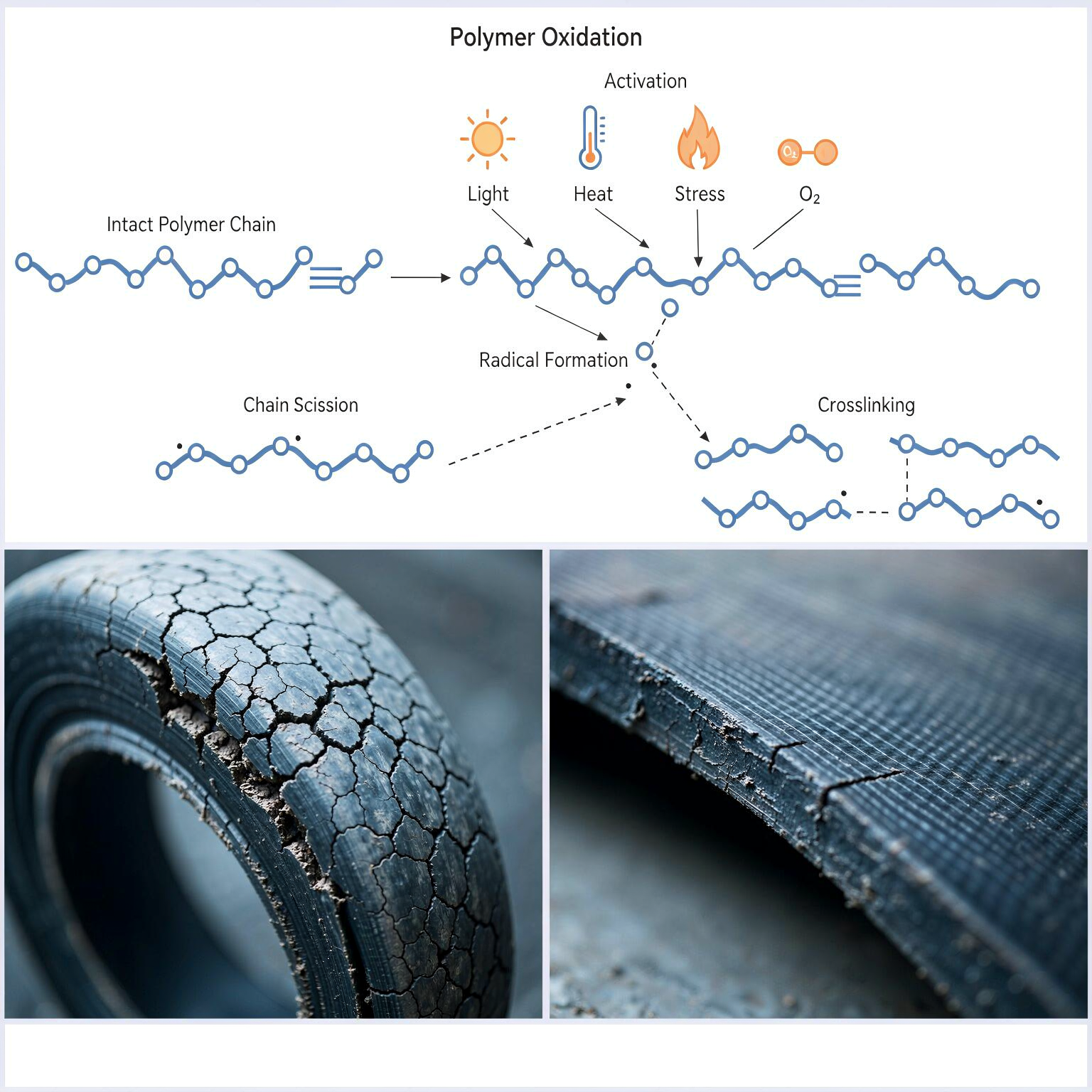
Common signs of oxidative degradation include:
Surface cracking and embrittlement
Loss of elasticity and flexibility
Hardening or softening of rubber materials
Discoloration and surface blooming
Reduced tensile strength and elongation
Deterioration of electrical insulation properties
Shortened product service life
Oxidation can occur during both manufacturing and actual product use.
Processing-stage oxidation
During rubber mixing, extrusion and vulcanization, processing temperatures can reach approximately 150–200°C. At these temperatures, oxidation reactions can accelerate significantly, potentially damaging polymer materials before the finished product is manufactured.
Long-term service oxidation
After production, rubber and plastic products may experience years of exposure to oxygen, heat, sunlight, oils and other environmental conditions. Continuous oxidative degradation can gradually reduce their performance. Therefore, an effective rubber antioxidant should provide protection during both high-temperature processing and long-term thermal aging. This is one of the key advantages of Antioxidant 1520: its molecular structure combines two antioxidant mechanisms to address different stages of oxidative degradation.
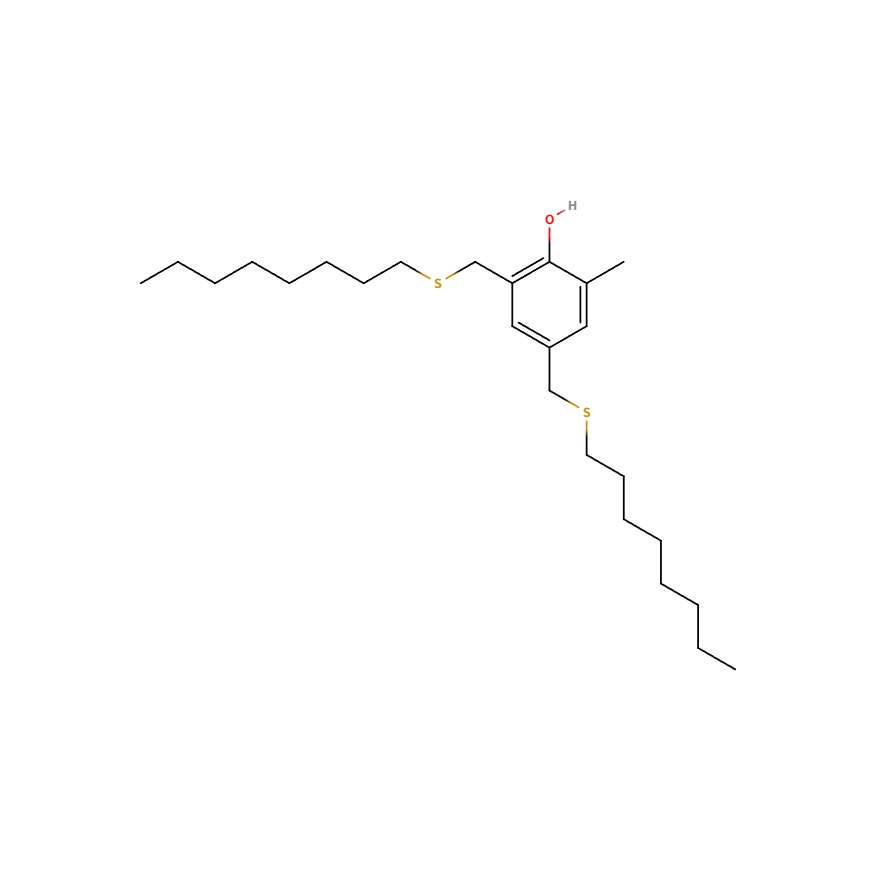
The chemical structure of Antioxidant 1520 explains its multifunctional antioxidant performance.
Its chemical name is:
2-Methyl-4,6-bis[(octylthio)methyl]phenol
 |
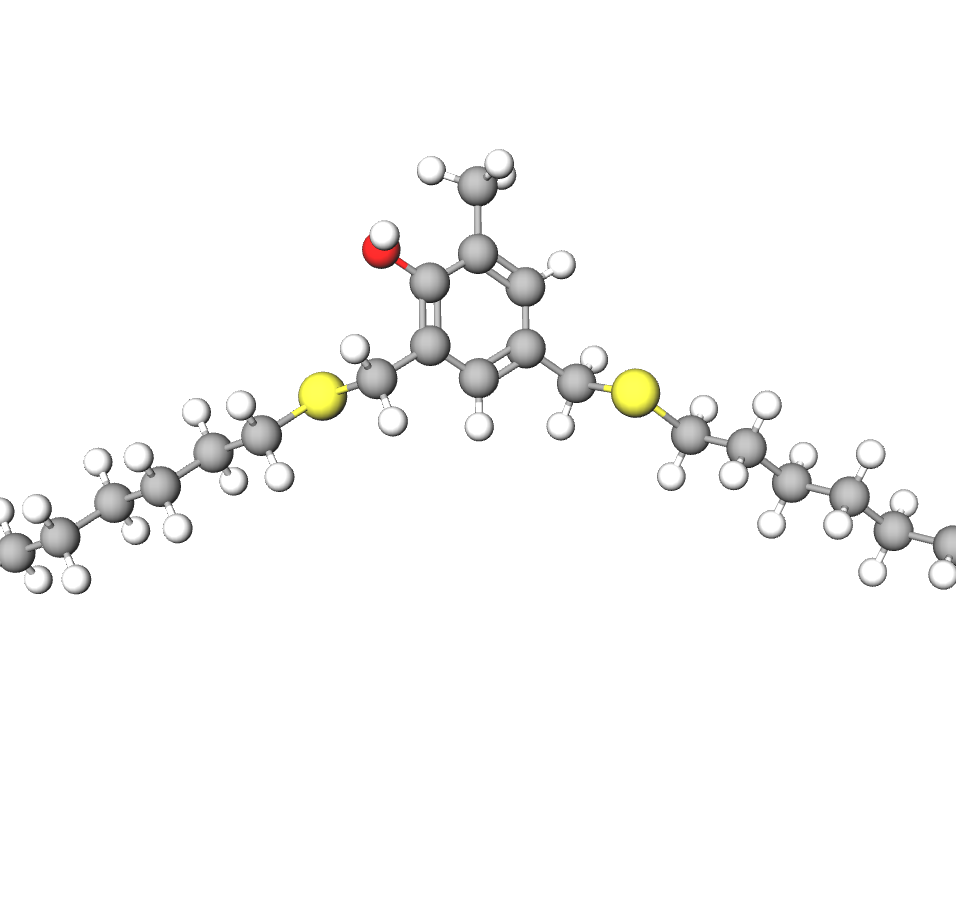 |
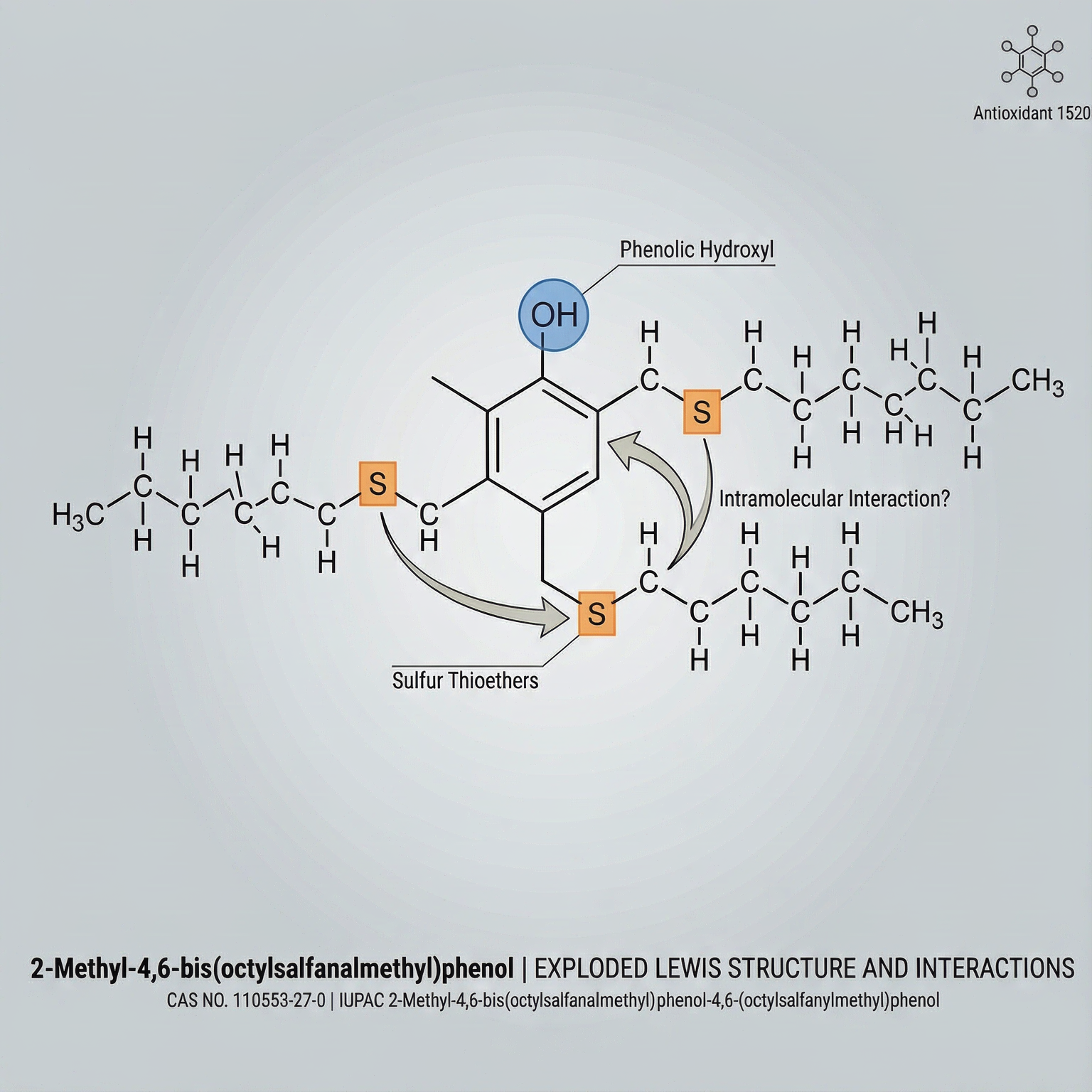
The molecule contains a phenolic aromatic ring with a methyl substituent and two octylthiomethyl side chains. These structural components perform different functions.
Hindered phenolic hydroxyl group
The phenolic hydroxyl group donates hydrogen atoms to reactive peroxy radicals, helping interrupt oxidation chain reactions.
Thioether groups
The two sulfur-containing side chains contribute to hydroperoxide decomposition, reducing the accumulation of oxidation intermediates that can generate additional free radicals.
Octyl groups
The octyl-containing side chains contribute to compatibility with organic polymer systems and help provide favorable physical properties for liquid processing.
|
Property |
Specification |
|---|---|
|
Chemical name |
2-Methyl-4,6-bis[(octylthio)methyl]phenol |
|
CAS Number |
110553-27-0 |
|
Molecular formula |
C₂₅H₄₄OS₂ |
|
Molecular weight |
424.75 |
|
Appearance |
Pale yellow transparent liquid |
|
Assay |
≥97% |
|
Density at 20°C |
0.97–0.985 g/cm³ |
|
Viscosity at 20°C |
80–90 mPa·s |
|
Melting point |
Approximately 12–15°C |
|
Flash point |
Approximately 200°C |
|
Vapor pressure at 25°C |
Approximately 2 × 10⁻⁵ Pa |
|
Light transmittance |
≥95% at 425 nm; ≥97% at 500 nm |
These properties make Antioxidant 1520 suitable for applications where liquid processing, low volatility and appearance stability are important considerations.
Technical note: Confirm the final specifications against the manufacturer's current TDS and COA before publication.
The most important characteristic of Antioxidant 1520 is its dual-function antioxidant mechanism. Conventional antioxidant systems often combine a primary antioxidant with a secondary antioxidant. The primary antioxidant captures free radicals, while the secondary antioxidant decomposes hydroperoxides. Antioxidant 1520 incorporates both functions into one molecular structure.
Polymer oxidation generally follows a free-radical chain reaction. The process begins when heat, oxygen, light or mechanical stress generates reactive alkyl radicals within the polymer. These radicals react with oxygen to produce peroxy radicals (ROO·), which can abstract hydrogen atoms from neighboring polymer chains and generate new radicals. The reaction continues, accelerating polymer degradation. Antioxidant 1520 contains a hindered phenolic hydroxyl group that can donate hydrogen atoms to peroxy radicals.
The simplified reaction is:
The resulting phenoxyl radical is stabilized by the aromatic structure, helping terminate the oxidation chain reaction. This mechanism helps protect rubber and polymer materials against oxidative degradation during processing and long-term use.
Although radical scavenging is important, it does not completely prevent oxidation. Hydroperoxides (ROOH) are formed during oxidation reactions. Under elevated temperatures or in the presence of metal ions, these unstable compounds can decompose and generate new free radicals. The thioether groups in Antioxidant 1520 provide a second line of defense. During oxidation, thioether groups can be progressively oxidized to sulfoxide and sulfone products. These sulfur-containing species participate in reactions that convert hydroperoxides into less reactive alcohol-type products.
A simplified representation is:
This secondary antioxidant mechanism helps reduce hydroperoxide accumulation and supports long-term thermal stability.
Combining radical scavenging and hydroperoxide decomposition offers several practical benefits:
Integrated protection: Both antioxidant functions are incorporated into the same molecule.
Simplified formulation: It can reduce the need for separate primary and secondary antioxidant additions in suitable applications.
Convenient processing: One liquid additive can be introduced through a single metering point.
Processing and service stability: The two mechanisms address different stages of oxidative degradation.
This multifunctional molecular design distinguishes Antioxidant 1520 from conventional single-function hindered phenolic antioxidants.
In addition to its chemical functionality, the physical form of Antioxidant 1520 provides important manufacturing advantages. Many traditional rubber and polymer antioxidants, including Antioxidant 1010 and Antioxidant 1076, are supplied as powders or granules. While solid antioxidants remain important in many formulations, their handling can introduce additional production challenges.
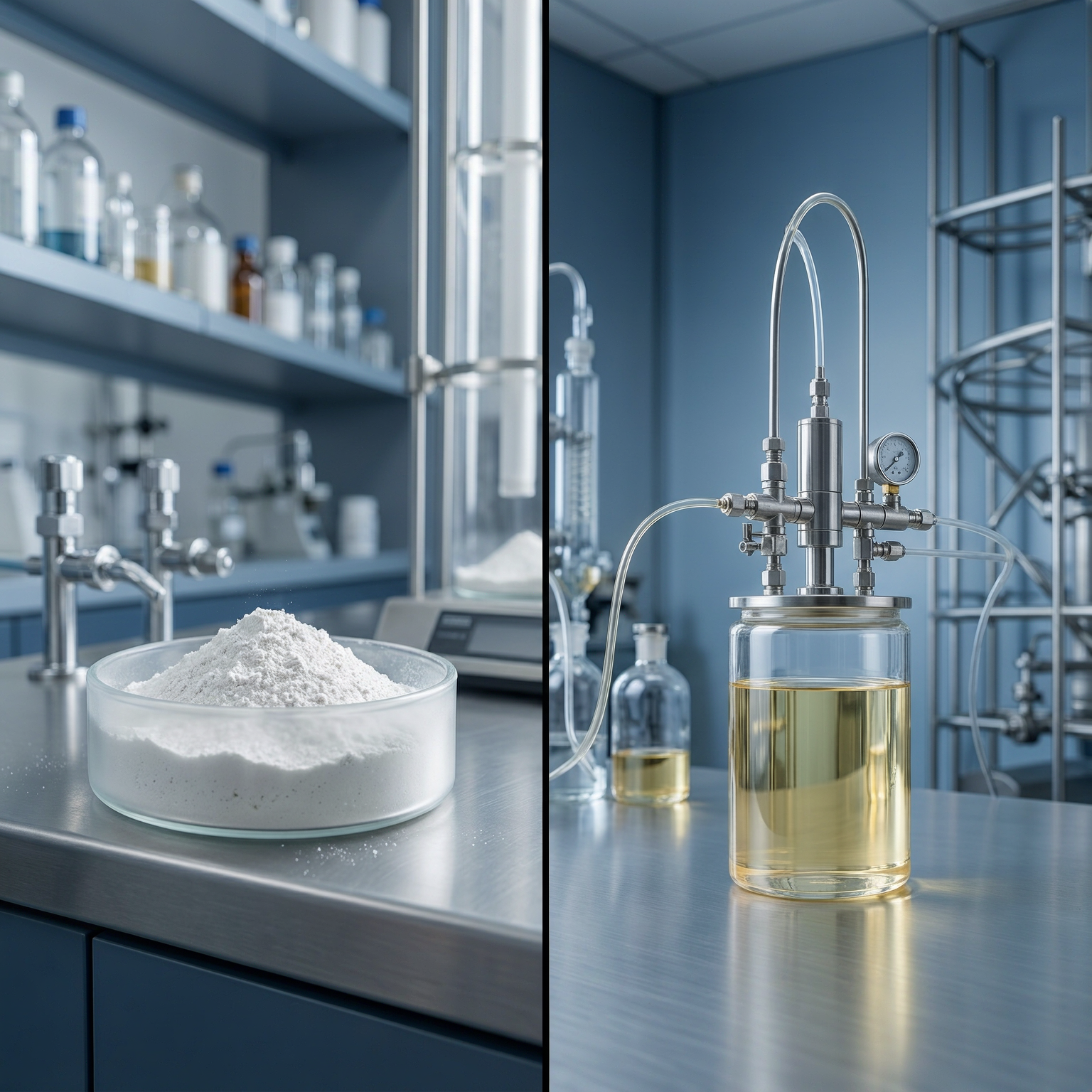
Antioxidant 1520 is a liquid above its melting range. With a viscosity of approximately 80–90 mPa·s at 20°C, it can be pumped, metered, dripped or sprayed into suitable production systems. This makes it particularly useful for continuous manufacturing processes where accurate additive feeding is important.
Liquid antioxidants can be easier to incorporate into certain polymer solutions, latex systems, adhesive formulations and liquid additive blends. Antioxidant 1520 can be introduced directly into compatible systems, helping reduce the dispersion challenges sometimes associated with powder additives.
Powder additives may generate airborne dust during weighing, charging and mixing. Liquid Antioxidant 1520 helps reduce dust-related handling issues and can simplify additive feeding operations.
Antioxidant 1520 has a reported vapor pressure of approximately 2 × 10⁻⁵ Pa at 25°C. Its low volatility helps minimize additive loss during elevated-temperature processing.
For manufacturers producing light-colored or transparent products, additive-related discoloration can be a major formulation concern. Antioxidant 1520 is described as a non-staining antioxidant with high light transmittance. This makes it worth evaluating in white rubber shoe soles, light-colored rubber seals, transparent adhesive formulations and selected specialty polymer applications. The final appearance should always be verified through formulation and aging tests.
Antioxidant 1520 is primarily associated with synthetic rubber and elastomer stabilization, although it also has applications in adhesives, sealants, lubricants and selected plastic formulations.
Synthetic rubber is one of the most important application areas for Antioxidant 1520.
It can be evaluated in:
Butadiene Rubber (BR): Helps improve oxidative stability in highly unsaturated rubber systems.
Styrene-Butadiene Rubber (SBR): Suitable for evaluation in emulsion and solution SBR systems.
Nitrile Butadiene Rubber (NBR): Relevant to oil-resistant seals, hoses and gaskets requiring thermal aging protection.
Natural Rubber (NR) and Isoprene Rubber (IR): Can help address oxidative degradation in unsaturated polymer structures.
Styrenic Thermoplastic Elastomers (SBS and SIS): Worth evaluating in systems exposed to repeated high-temperature processing.
Antioxidant 1520 can be used as a raw rubber stabilizer or as a compound antioxidant, depending on the production process.
Antioxidant 1520 can be incorporated into selected pressure-sensitive adhesives, solvent-based adhesives and sealant formulations. Oxidative degradation can affect initial tack, adhesive flexibility, cohesive strength and long-term bonding performance. Its liquid form is advantageous in compatible solvent-based and liquid adhesive systems. However, the thioether structure may generate a slight sulfurous odor at elevated temperatures. Therefore, careful evaluation is necessary for odor-sensitive hot-melt adhesives.
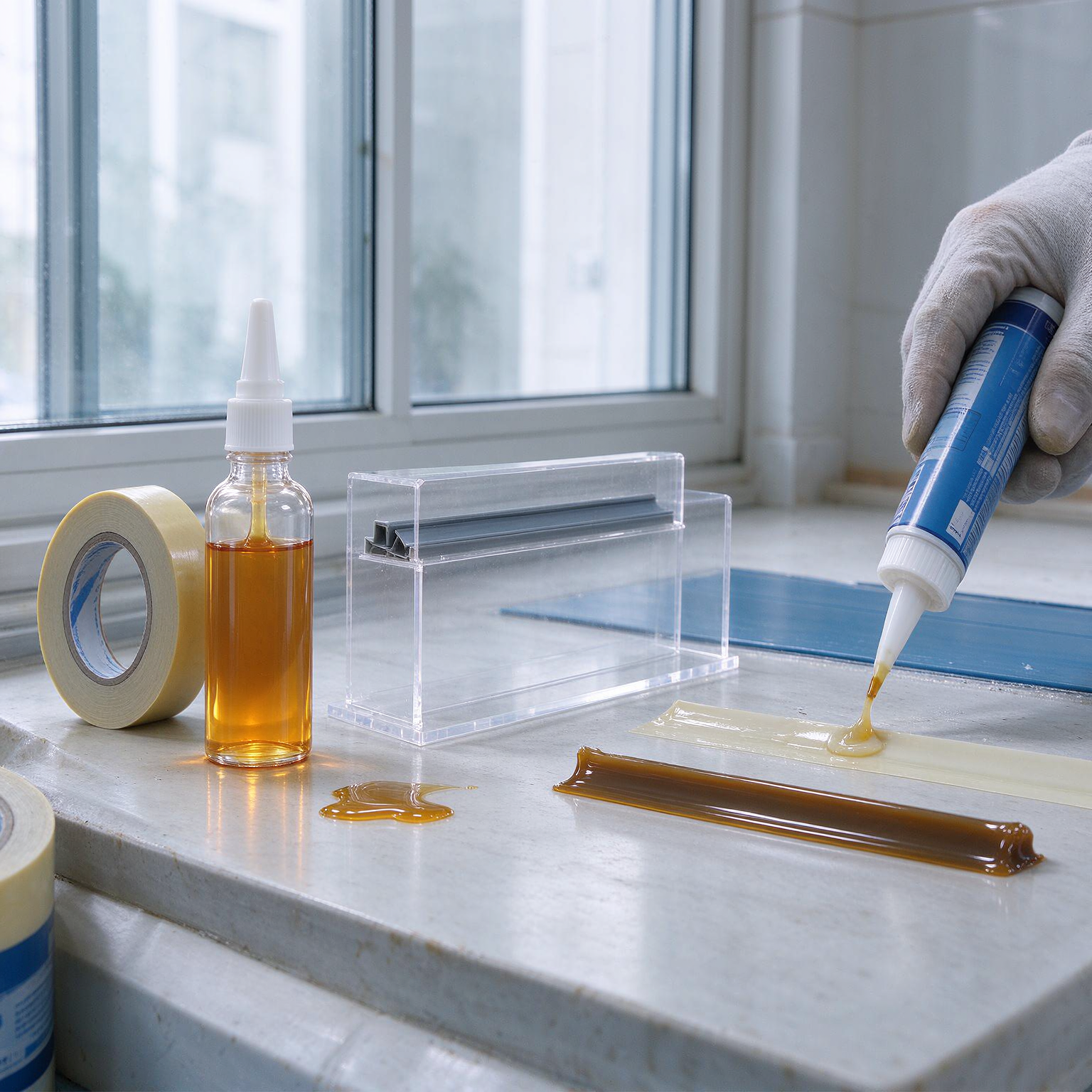
Antioxidant 1520 can be used in selected mineral oils, synthetic lubricants and grease formulations. Oxidation in lubricants can contribute to increased viscosity, sludge formation, higher acid number and reduced lubricant performance. Its low volatility and compatibility with suitable oil-based systems make it a candidate for high-temperature lubricant applications.
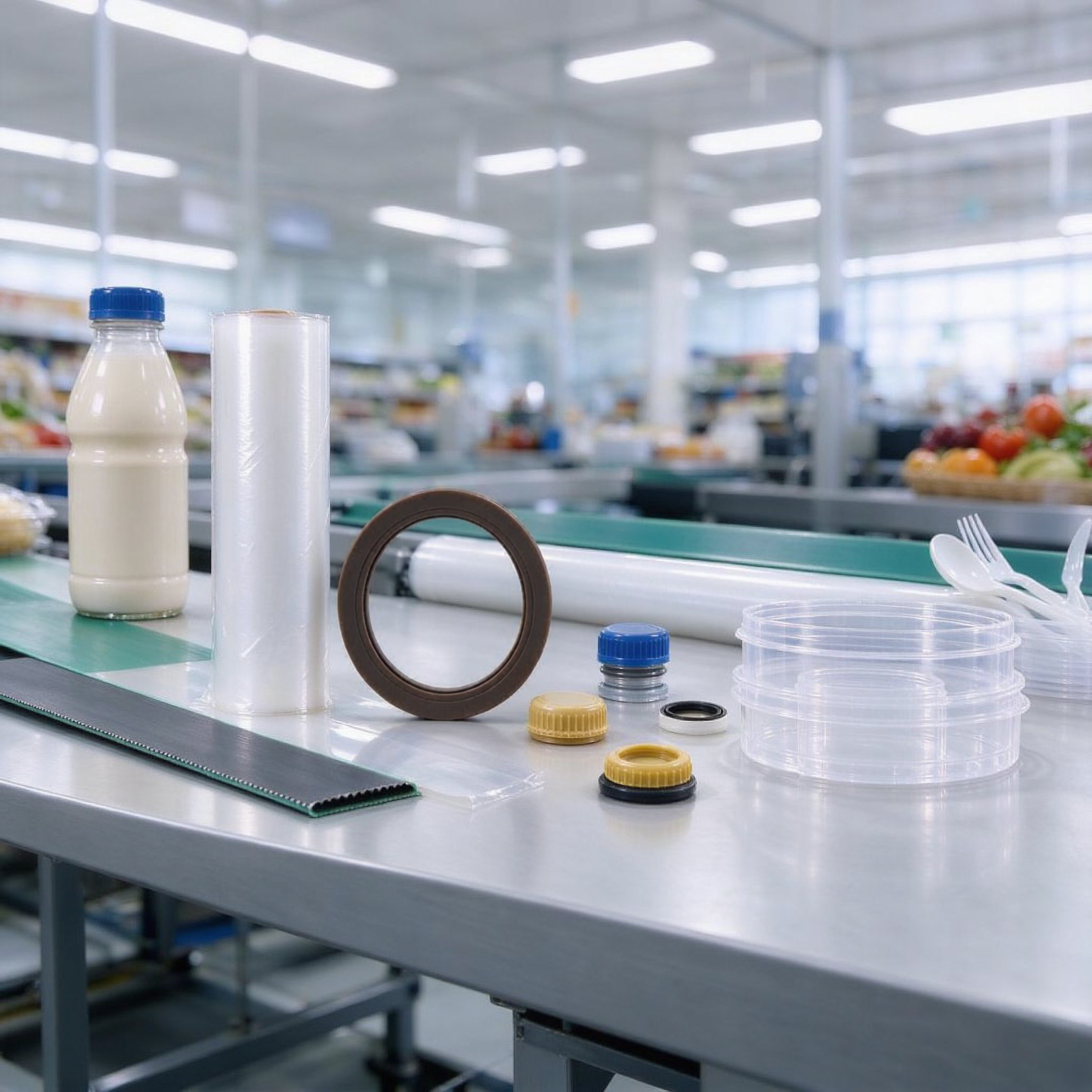
In plastic applications, Antioxidant 1520 is generally used as a supporting antioxidant rather than the primary stabilization component. It can be combined with hindered phenolic antioxidants such as Antioxidant 1010 or 1076 and phosphite antioxidants such as Antioxidant 168. Its liquid form may also improve incorporation into compatible masterbatches and additive blends.
The appropriate dosage depends on polymer type, processing temperature, formulation composition and expected service conditions. The typical dosage reported in the original technical article is:
Typical recommended dosage
Based on the dosage basis specified in the original technical article.
The original article also reports approximately 0.5–3 phr. The percentage and phr figures should be reconciled against the exact formulation basis before publication or application.
|
Application |
Addition point |
|---|---|
|
Emulsion polymerization |
Add to latex before coagulation |
|
Solution polymerization |
Add after polymerization and before devolatilization |
|
Dry rubber mixing |
Add at the beginning of mixing with fillers |
|
Adhesives and sealants |
Add during the solvent or base-charge stage |
Under demanding conditions, Antioxidant 1520 may be combined with:
Antioxidant 168
Antioxidant 1135
Benzofuranone antioxidants
Hindered Amine Light Stabilizers (HALS)
Compatibility, solubility and dosage should be evaluated in the actual formulation.
Antioxidant 1520 has a melting point of approximately 12–15°C. At lower temperatures, it may solidify or partially crystallize. If crystallization occurs, the original technical article recommends gradually warming the product to approximately 40–60°C until melted, followed by stirring. Store in sealed containers in a cool, dry place protected from direct light. Follow the supplier's current safety and handling instructions.
|
Property |
1520 |
1010 |
1076 |
BHT |
|---|---|---|---|---|
|
Chemical type |
Hindered phenol + thioether |
Hindered phenol |
Hindered phenol |
Hindered phenol |
|
Physical form |
Liquid |
White powder |
White powder |
Crystalline solid |
|
Molecular weight |
424.75 |
1178 |
531 |
220 |
|
Standalone function |
Dual-function |
Usually requires secondary antioxidant |
Usually requires secondary antioxidant |
Usually requires secondary antioxidant |
|
Volatility |
Low |
Very low |
Low |
Relatively high |
|
Typical applications |
Rubber, elastomers, adhesives, latex |
Polyolefins, engineering plastics |
Polyolefins |
Oils, fats and selected industrial applications |
Antioxidant 1520 is particularly worth considering when the application involves synthetic rubber or elastomers, both processing and long-term oxidation protection are required, liquid additive handling is preferred, and good appearance stability is important. The final choice should be based on comparative formulation and aging tests rather than chemical structure alone.
Q1: What is the chemical name of Antioxidant 1520?
Its chemical name is 2-Methyl-4,6-bis[(octylthio)methyl]phenol. Its CAS number is 110553-27-0.
Q2: What is Antioxidant 1520 used for?
It is primarily used to improve oxidation resistance in synthetic rubber and thermoplastic elastomers. It can also be evaluated in selected adhesives, sealants, lubricants and plastic formulations.
Q3: Is Antioxidant 1520 a primary or secondary antioxidant?
It provides both primary and secondary antioxidant functions. Its phenolic group captures free radicals, while its thioether groups contribute to hydroperoxide decomposition.
Q4: What is the recommended dosage of Antioxidant 1520?
The typical dosage reported is 0.05%–0.3%, depending on formulation and application requirements. Actual dosage should be established through laboratory testing.
Q5: Is Antioxidant 1520 liquid or solid?
It is generally supplied as a pale yellow transparent liquid. Its melting point is approximately 12–15°C.
Q6: Can Antioxidant 1520 be used in SBR and NBR?
Yes. It can be evaluated in SBR, NBR, BR, NR, IR, SBS and SIS formulations.
Q7: What is the difference between Antioxidant 1520 and Antioxidant 1010?
Antioxidant 1520 combines hindered phenolic and thioether functions in a liquid molecule. Antioxidant 1010 is a solid hindered phenolic antioxidant and generally needs a secondary antioxidant for comprehensive stabilization.
Q8: Does Antioxidant 1520 cause discoloration?
It is described as a non-staining antioxidant. Its suitability for light-colored and transparent products should be verified through actual formulation testing.
Q9: Can Antioxidant 1520 be used in food-contact materials?
The original article reports approvals in several jurisdictions. However, users should verify current regulatory documentation for the specific grade and intended application before use.
Q10: How should Antioxidant 1520 be stored?
Store it in sealed containers in a cool, dry location protected from light. Temperature management is important because the product may solidify below its melting range.
Antioxidant 1520, chemically known as 2-Methyl-4,6-bis[(octylthio)methyl]phenol, is a multifunctional liquid antioxidant designed to provide two complementary forms of oxidation protection. Its hindered phenolic group helps capture free radicals, while its thioether groups contribute to hydroperoxide decomposition. This dual-function design makes it a valuable candidate for synthetic rubber, thermoplastic elastomers, adhesives, sealants, lubricants and selected plastic applications. With its convenient liquid form, low volatility and non-staining characteristics, Antioxidant 1520 offers manufacturers an alternative approach to conventional antioxidant combinations. For formulators and rubber manufacturers, the most important consideration is selecting an antioxidant system that matches the polymer structure, manufacturing conditions and final product requirements.
 EN