
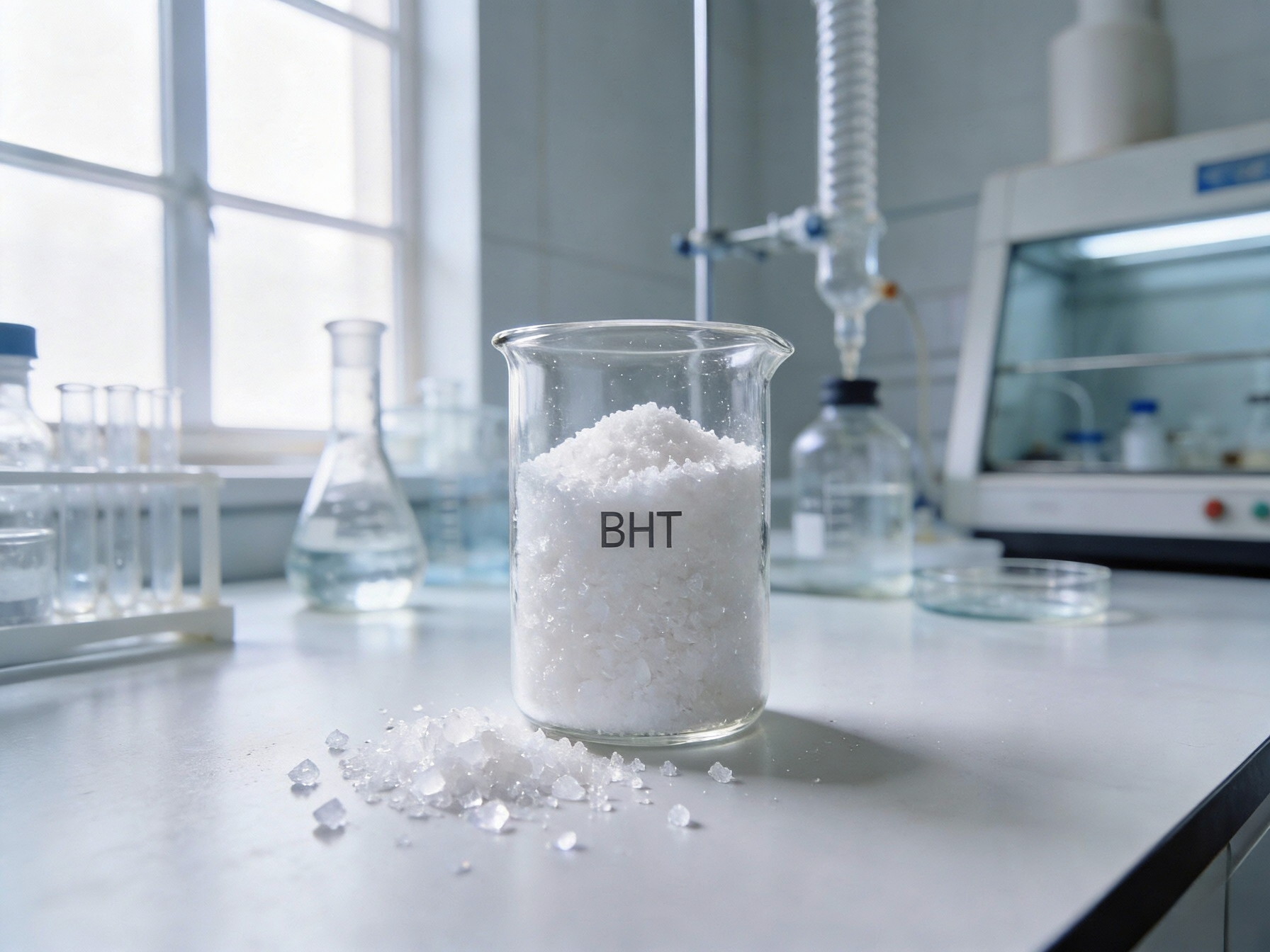
Butylated Hydroxytoluene (BHT) is a white crystalline or crystalline‑powder industrial antioxidant with a global annual consumption of hundreds of thousands of tonnes.
Introduction: Entering the World of Antioxidants
In modern industrial society, there exists a chemical substance that is nearly ubiquitous. It can be found in your breakfast oatmeal, your daily cosmetics, and even automobile engine oil. This substance is Butylated Hydroxytoluene, abbreviated as BHT.
BHT is arguably one of the most important chemicals you have never heard of. It is widely used in food, industry, cosmetics and pharmaceuticals, with a global annual consumption reaching hundreds of thousands of tonnes. Nevertheless, controversies surrounding BHT have never subsided. Some regard it as a “guardian” that extends shelf life, while others worry about its potential health risks.
This article offers an in‑depth look at BHT, covering its discovery history, chemical principles, application scenarios, safety debates and the development trends of alternatives, to present an objective and well‑rounded profile of BHT.
I. Discovery and Evolution: A Seventy‑Year Industrial Epic
1.1 Origins: From Laboratory to Industrial‑Scale Production
Industrial production of BHT began in the 1940s. According to historical records, the patent for BHT was granted in 1947. Later in 1954, it obtained approval from the U.S. Food and Drug Administration (FDA) for formal use as a food additive.
From the perspective of chemical history, the emergence of BHT was a direct outcome of breakthroughs in organic chemistry research in the first half of the 20th century. Chemists conducted thorough research on the alkylation reaction between p‑cresol and isobutylene, and ultimately developed an efficient synthetic process for BHT.
1.2 Three Stages of Industrialization
Phase 1 (1940s‑1950s): Protective Agent for the Rubber Industry BHT was initially mainly applied in the rubber industry. Natural and synthetic rubbers are prone to oxidative degradation during production, storage and service, resulting in performance deterioration. As an efficient phenolic anti‑aging agent, BHT effectively inhibits oxidative aging of rubber products and prolongs their service life. During this period, BHT secured its solid position as an industrial antioxidant.
Phase 2 (1950s‑1970s): Widespread Penetration into the Food Industry Following FDA’s approval of BHT for food use in 1954, its application scope expanded dramatically. It was extensively adopted in oils and fats, food packaging materials, chewing gum bases and other sectors. Statistics show that the U.S. annual output of BHT hit 19.81 million pounds in 1976, of which approximately 8.86 million pounds were used in food applications.
Phase 3 (1980s‑Present): Diversification Parallel with Regulatory Standardization Since the 1980s, rising consumer health awareness and improved regulatory policies worldwide have subjected the BHT industry to stricter scrutiny. Meanwhile, technological innovation has driven BHT products toward higher purity and specialized formulations.
1.3 Development Trajectory in the Chinese Market
In China, the development of BHT is closely tied to the country’s industrialization drive after the reform and opening‑up. At present, China is the world’s largest producer and consumer of BHT, accounting for over 50 % of global output in 2019. The domestic market features products from local manufacturers as well as imported brands from Germany, Spain, the United States and other countries.
II. Chemical Fundamentals: Molecular Structure and Antioxidant Mechanism
2.1 Basic Physicochemical Properties
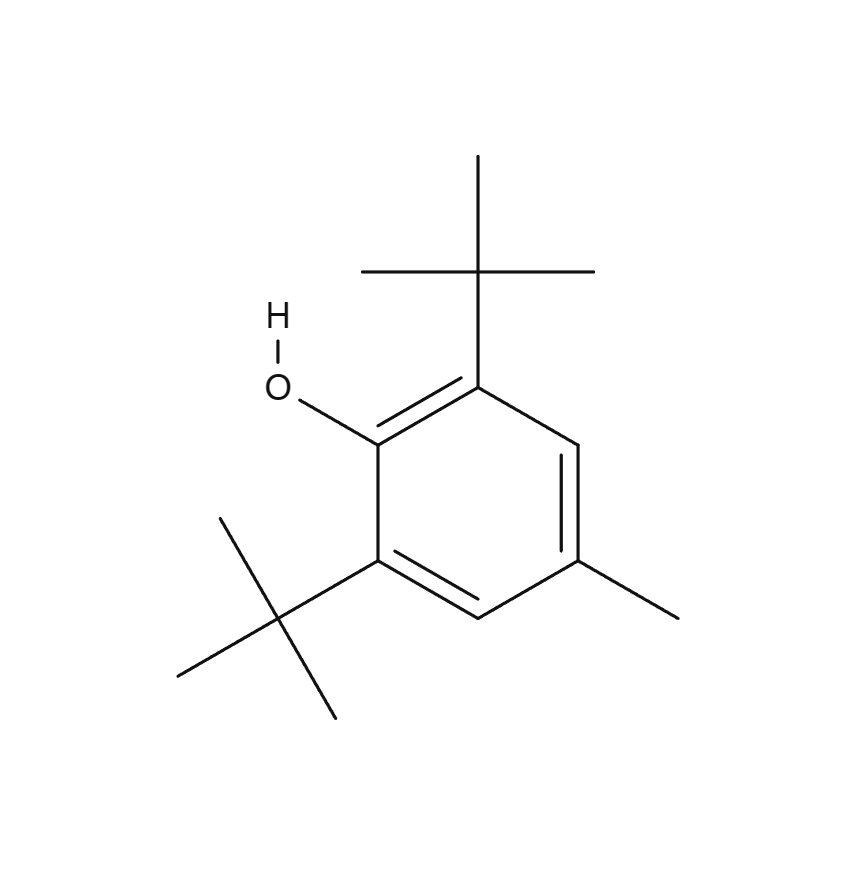
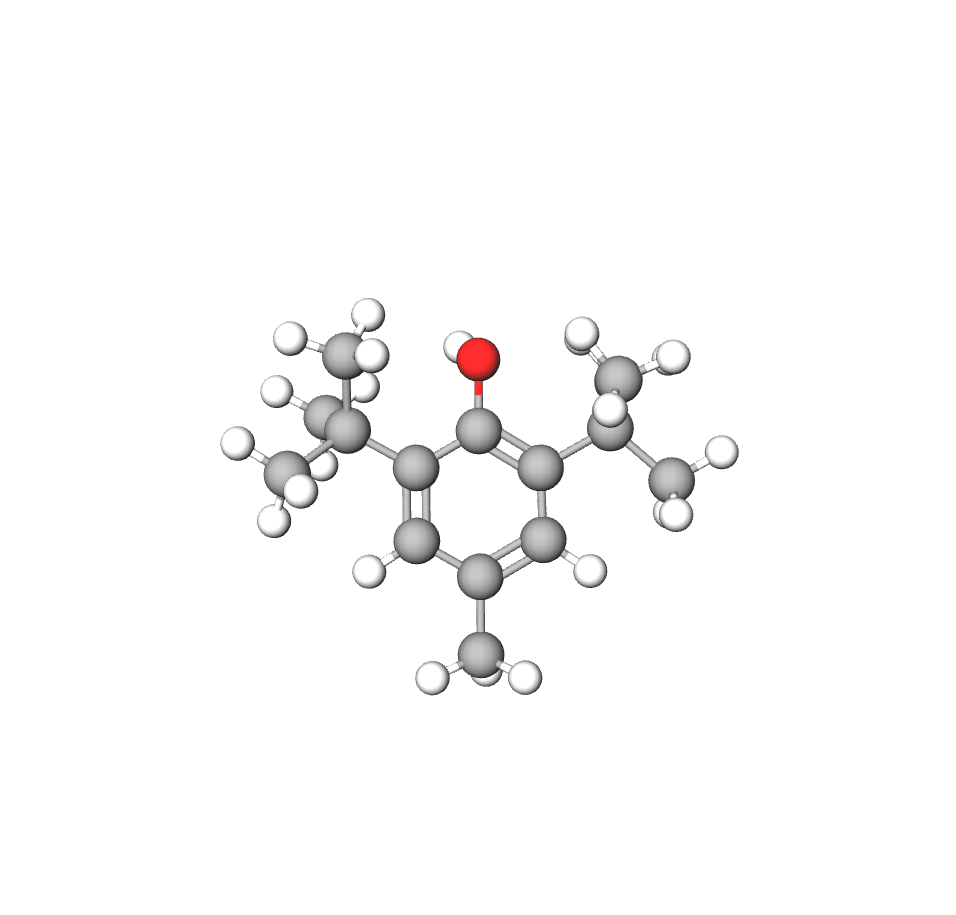
BHT, chemically named 2,6‑di‑tert‑butyl‑4‑methylphenol, has the molecular formula C₁₅H₂₄O and a molecular weight of 220.36. Its core structure consists of a benzene ring substituted with two tert‑butyl groups, one hydroxyl group and one methyl group.
 |
 |
Physical Properties
Its unique lipophilicity enables BHT to disperse evenly within oils and fats, thereby delivering optimal antioxidant performance.
2.2 Brief Antioxidant Mechanism
Antioxidant mechanism of BHT: the phenolic hydroxyl group donates a hydrogen atom to peroxyl radicals (ROO·) to form stable phenoxyl radicals, thus terminating free‑radical chain reactions.
Oxidative rancidity of fat‑containing substances proceeds via free‑radical chain reactions. Triggered by light, heat and other factors, unsaturated fatty acids generate free radicals, which react with oxygen to form peroxyl radicals (ROO·). Peroxyl radicals then attack further fatty‑acid molecules, setting off a self‑sustaining vicious cycle.
The ingenuity of BHT lies in the phenolic hydroxyl group (‑OH) in its molecule, which actively donates hydrogen atoms to tame reactive free radicals into stable products. BHT itself is converted into highly stable phenoxyl radicals. This stability arises from steric hindrance and electronic effects of the two bulky tert‑butyl groups on the benzene ring: they shield phenoxyl radicals from further attack and reduce the bond‑dissociation energy of phenolic hydroxyl groups, facilitating hydrogen‑atom release.
In short, BHT sacrifices one hydrogen atom to break one radical chain reaction. This low‑cost termination of oxidative chain reactions makes it one of the most effective phenolic antioxidants.
III. Application Landscape: A Ubiquitous Presence
BHT’s scope of application exceeds most people’s expectations. Ranging from daily consumer goods to high‑end industry, from food preservation to aerospace materials, BHT permeates modern industrial society thanks to its high efficiency, stability and cost‑effective antioxidant performance.
3.2 Food Industry: Preserving Flavor and Shelf‑Life
In the food sector, BHT is one of the most widely used oil‑soluble antioxidants. Its key functions include:
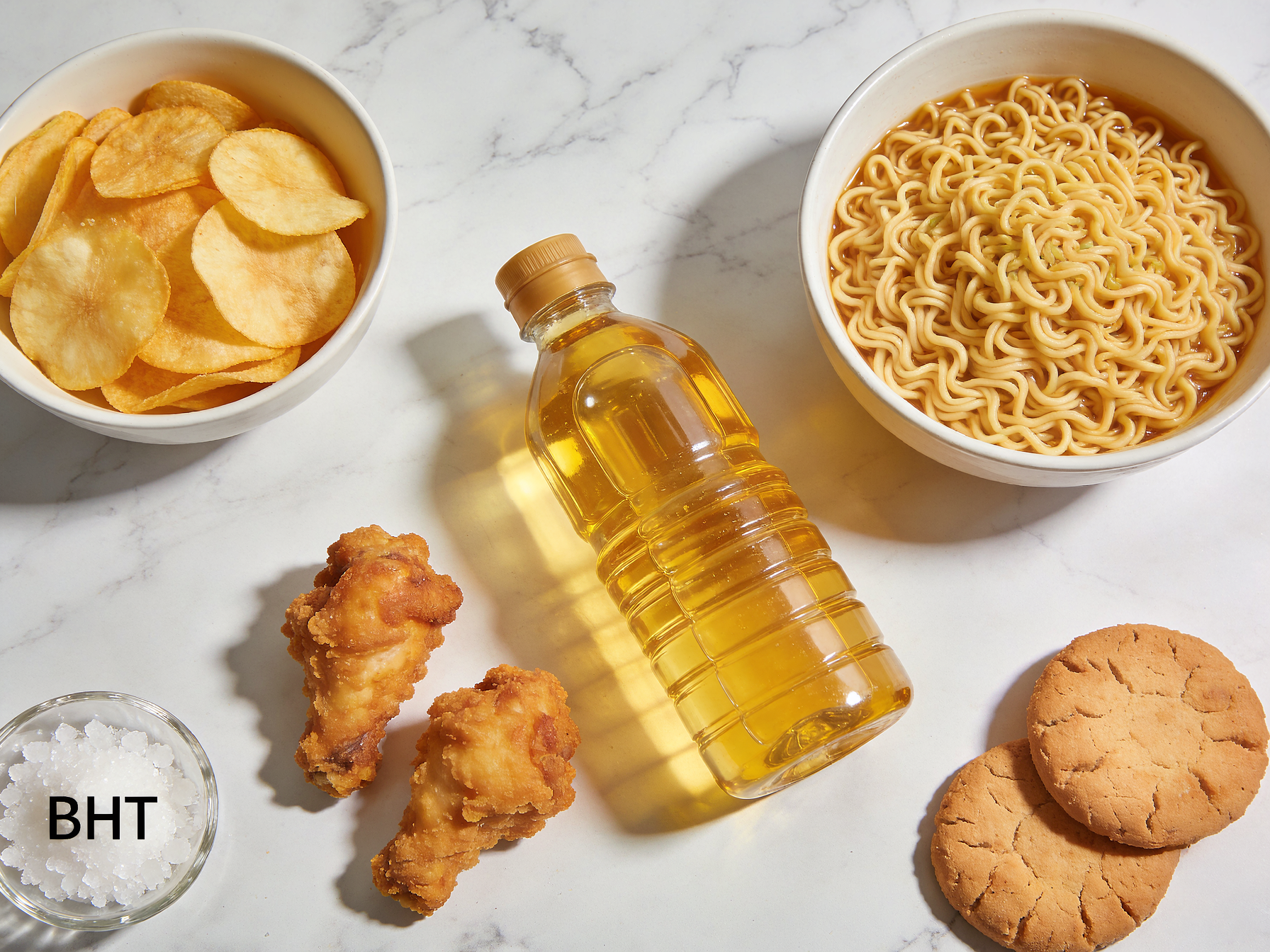
Major Food Categories of Application ‑ Edible oils (soybean oil, palm oil, etc.) ‑ Fried foods (potato chips, fried chicken, etc.) ‑ Baked goods (biscuits, cakes, etc.) ‑ Instant noodles, puffed snacks ‑ Cured meat products ‑ Chewing gum and gum‑based confectionery
Chinese Standard: According to GB 2760‑2014 National Food Safety Standard – Standards for Uses of Food Additives, the maximum permitted level of BHT (food additive number E321) in the above‑mentioned foods is 0.4 g/kg.
Industrial Practical Case: On large‑scale instant‑noodle production lines, high‑temperature fried noodle cakes contain abundant active lipid oxidation products. Without antioxidants, obvious rancid off‑odors develop within two weeks under ambient storage. With 0.02 % BHT added, shelf‑life extends to 6‑12 months with minimal flavor change. Similarly, for puffed snacks such as potato chips, BHT is often compounded with BHA (butylated hydroxyanisole) at a typical BHA:BHT ratio of 2:1. Synergistic effects boost antioxidant performance by more than 40 %.
3.2 Cosmetics and Personal Care: Safeguarding Product Quality
In cosmetics, BHT acts primarily as an antioxidant and stabilizer with irreplaceable functions: ‑ Protect oil‑based ingredients: Vegetable oils, mineral oils and other lipid components in cosmetics readily undergo oxidative rancidity. BHT slows this process to maintain product stability and safety. ‑ Preserve sensory quality: Prevent oxidation‑triggered discoloration, off‑odors and phase separation. ‑ Extend shelf‑life: Continuously defend products against oxidation after opening.
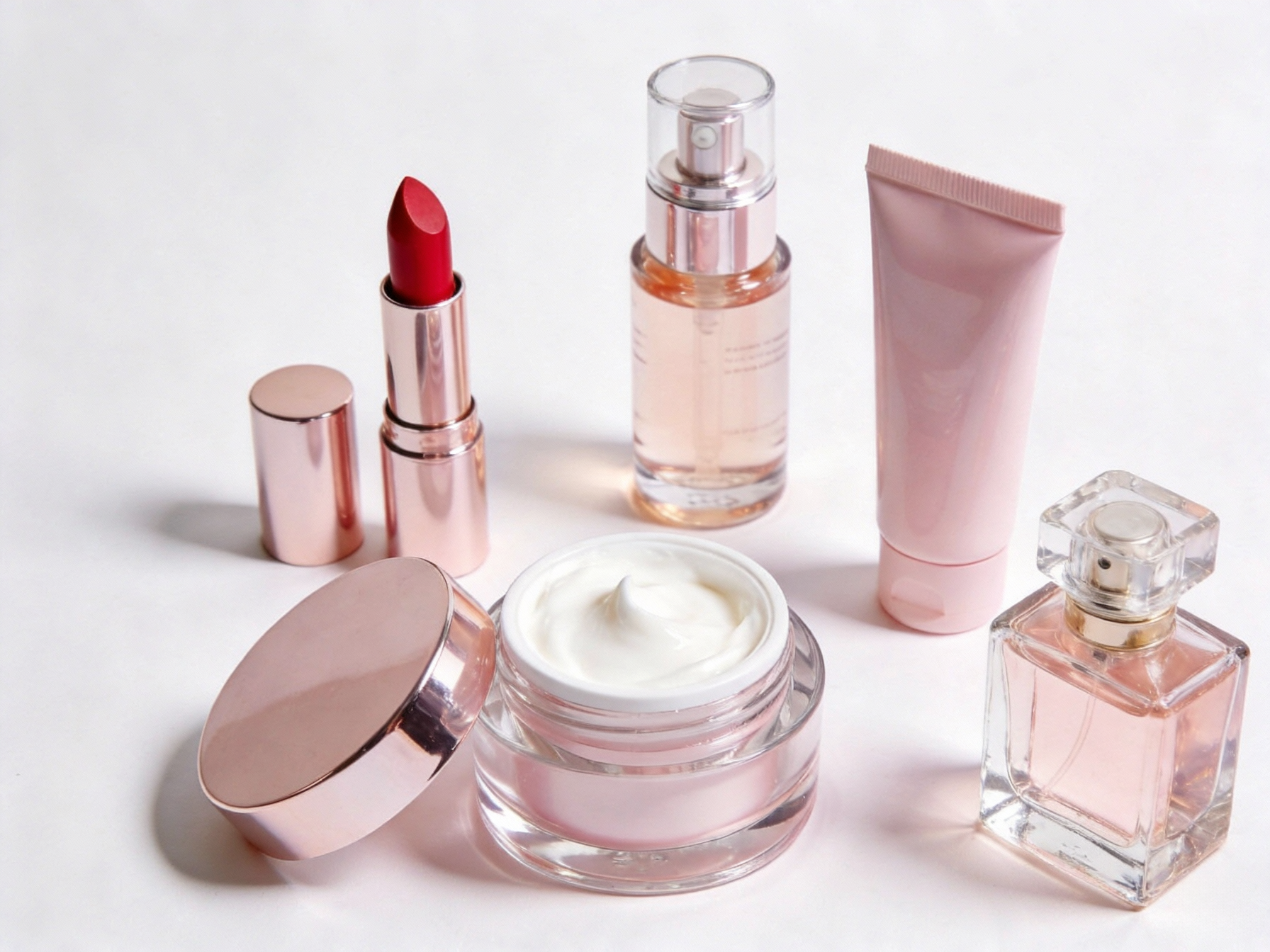
Common Product Types ‑ Skin‑care products (creams, lotions) ‑ Color cosmetics (lipsticks, eye shadows) ‑ Hair‑care articles (hair oils, shampoos) ‑ Perfumes and fragrances ‑ Baby‑care products
Formulation Role: In cosmetic formulations, typical BHT dosage ranges from 0.01 % to 0.5 %. It is frequently combined with other antioxidants such as vitamin E and ascorbyl palmitate. Note that the addition timing of BHT matters: it is normally incorporated during emulsification to ensure uniform distribution in the oil phase. For products rich in unsaturated vegetable oils (e.g. rosehip oil, hemp‑seed oil), BHT serves as an almost indispensable safety measure.
EU Regulatory Limits for BHT in Cosmetics: ‑ Mouthwash: ≤ 0.001 % ‑ Toothpaste: ≤ 0.1 % ‑ Other rinse‑off and leave‑on products: ≤ 0.8 %
3.3 Rubber and Polymer Industry: Cornerstone of Anti‑Aging
The rubber and polymer sector represents BHT’s earliest and most stable market.
Rubber Anti‑Aging
During processing, storage and service, rubber goods are unavoidably subjected to heat, oxygen, light and mechanical stress, leading to thermo‑oxidative aging. This process is also a free‑radical chain reaction: rubber molecular chains break to generate free radicals, which react with oxygen and cause further chain degradation or cross‑linking. Macroscopically, products become hard, brittle, cracked or sticky.
As an efficient phenolic anti‑aging agent, BHT delivers good protective effects for the following rubber types: ‑ Natural rubber (NR) ‑ Styrene‑butadiene rubber (SBR) ‑ Nitrile‑butadiene rubber (NBR) ‑ Ethylene‑propylene‑diene rubber (EPDM) ‑ Polyurethane rubber (PU)
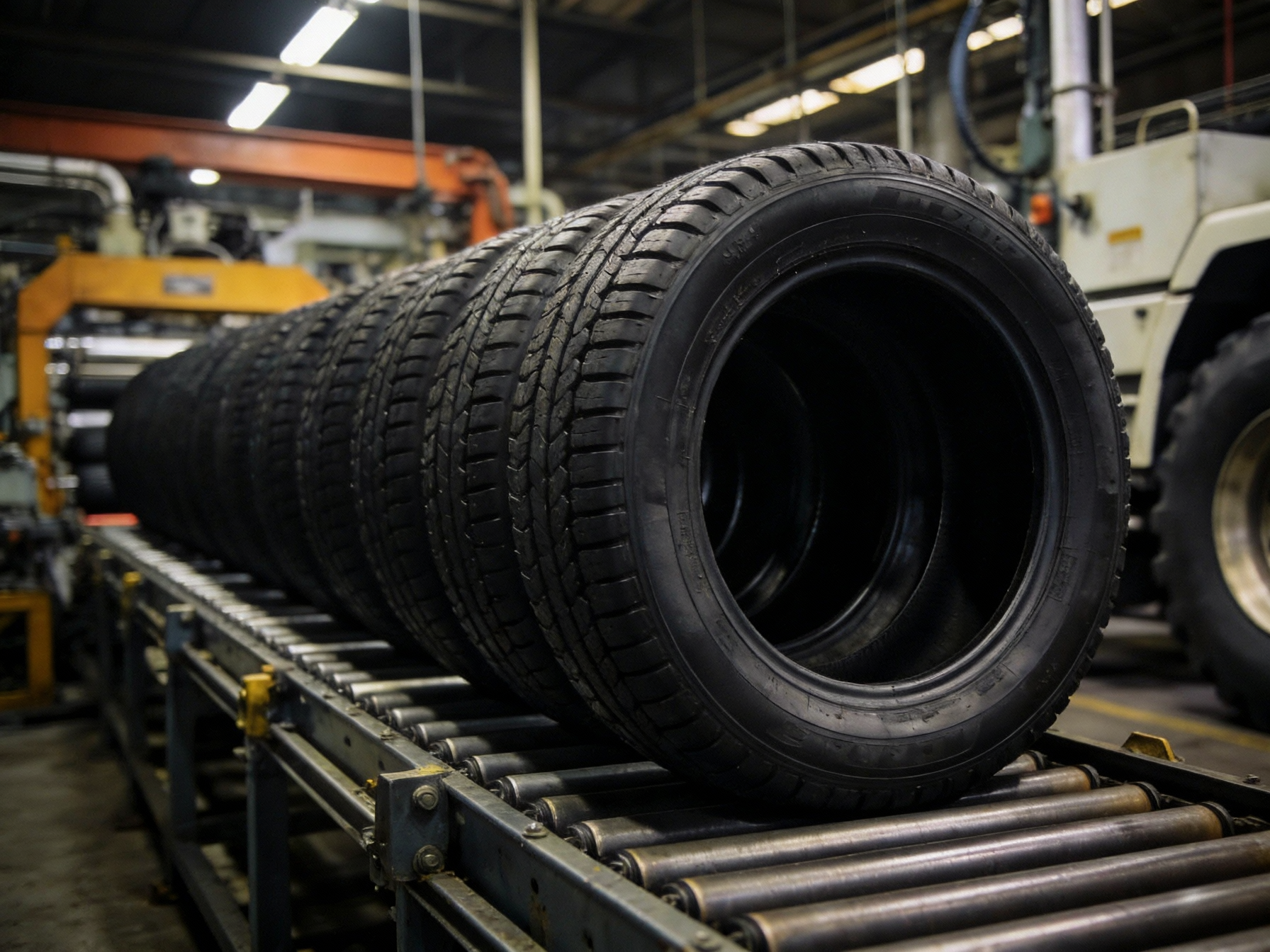
In the tire industry, BHT is often compounded with other anti‑aging agents (e.g. amine‑type antioxidants RD, MB) to build synergistic protection systems. In a standard passenger‑car tire, BHT‑based antioxidants account for roughly 0.1‑0.5 % of rubber mass. Despite low dosage, storage life is extended 2‑3‑fold, slowing tread cracking and sidewall aging during service.
Plastic Stabilization
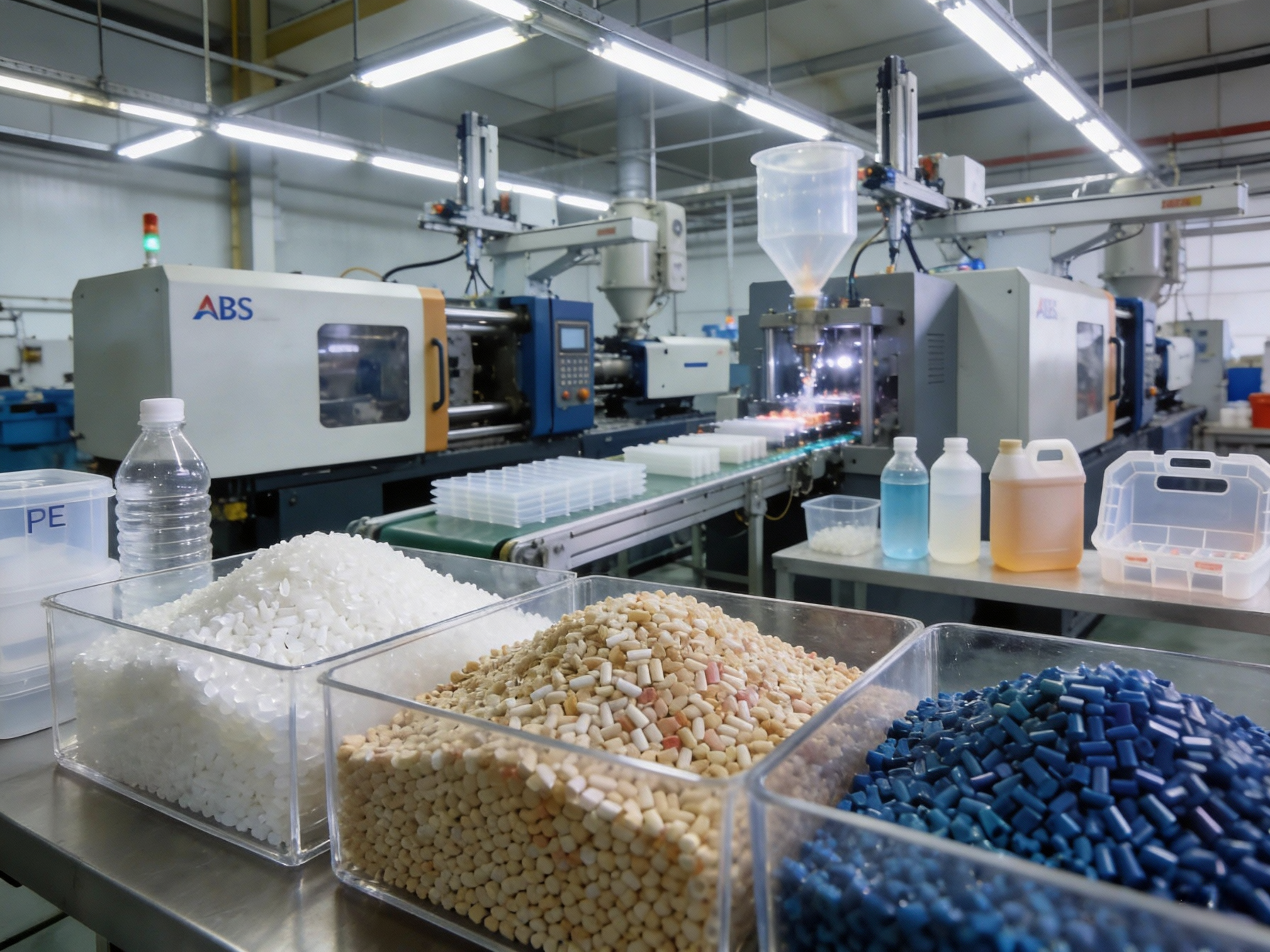
BHT also plays a critical role in plastics. Polymers undergo high‑temperature shearing during processing, generating large quantities of free radicals that trigger molecular‑chain scission (degradation) or abnormal cross‑linking, impairing mechanical properties and appearance. BHT is widely applied in the following plastics:
|
Plastic |
Function of BHT |
Typical Dosage |
|
Polyethylene (PE) |
Resist thermo‑oxidative aging during processing and service |
0.01‑0.05 % |
|
Polypropylene (PP) |
Inhibit processing degradation and photo‑thermal synergistic aging |
0.05‑0.1 % |
|
Polystyrene (PS) |
Prevent yellowing and embrittlement |
0.02‑0.05 % |
|
ABS resin |
Protect butadiene phase against oxidation |
0.05‑0.1 % |
|
Polyvinyl chloride (PVC) |
Auxiliary thermal stabilization |
0.01‑0.03 % |
In plastic processing, BHT is commonly combined with phosphite secondary antioxidants to form the classic “primary antioxidant + secondary antioxidant” system. Primary antioxidants such as BHT trap free radicals, while secondary antioxidants decompose hydroperoxides. Their joint action delivers comprehensive polymer protection.
3.4 Petroleum and Lubricant Industry: Unsung Hero for Equipment Durability
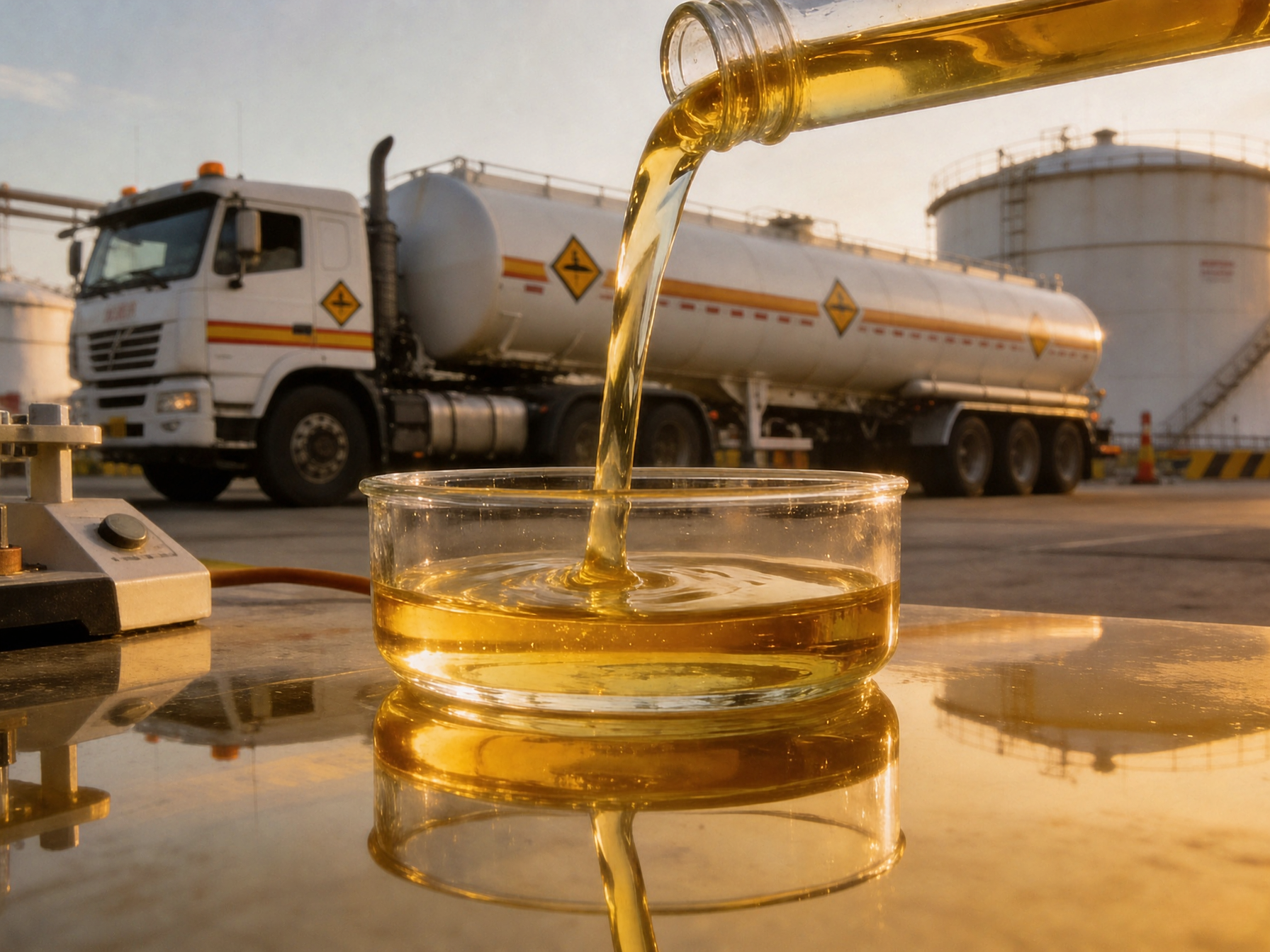
This is a less‑known yet vitally important application area. BHT performs best below 100 °C, matching the operating temperature range of most industrial lubricants.
Lubricant Antioxidation: Lubricants in industrial equipment (steam turbines, hydraulic systems, gearboxes) oxidize under sustained high‑temperature and metal‑catalyzed conditions, producing acidic substances and sludge that cause corrosion and component wear. BHT mitigates these changes and prolongs lubricant service life. Typical applications: ‑ Turbine oils: 0.3‑0.6 % BHT added to steam‑ and gas‑turbine lubricants multiplies oil service life 3‑5‑fold. ‑ Transformer oils: BHT improves oxidation stability of electrical insulating oils, retarding sludge formation and preserving insulating performance. ‑ Hydraulic oils: Prevent viscosity drift and corrosion caused by oil oxidation in high‑pressure hydraulic systems. ‑ Heat‑transfer oils: Suppress thermal degradation under cyclic high‑temperature conditions. ‑ Brake fluids: Maintain chemical stability at elevated temperatures.
Paraffin and Specialty Petroleum Products: Paraffin tends to oxidize on storage, causing yellowing and off‑odors. Addition of 0.01‑0.05 % BHT preserves whiteness and odor quality. BHT is similarly used in petrolatum and white mineral oil.
Fuel Additives: In certain aviation fuels and gasoline, BHT acts as a gum inhibitor, suppressing oxidative sediment formation during storage and transportation and keeping fuel systems clean.
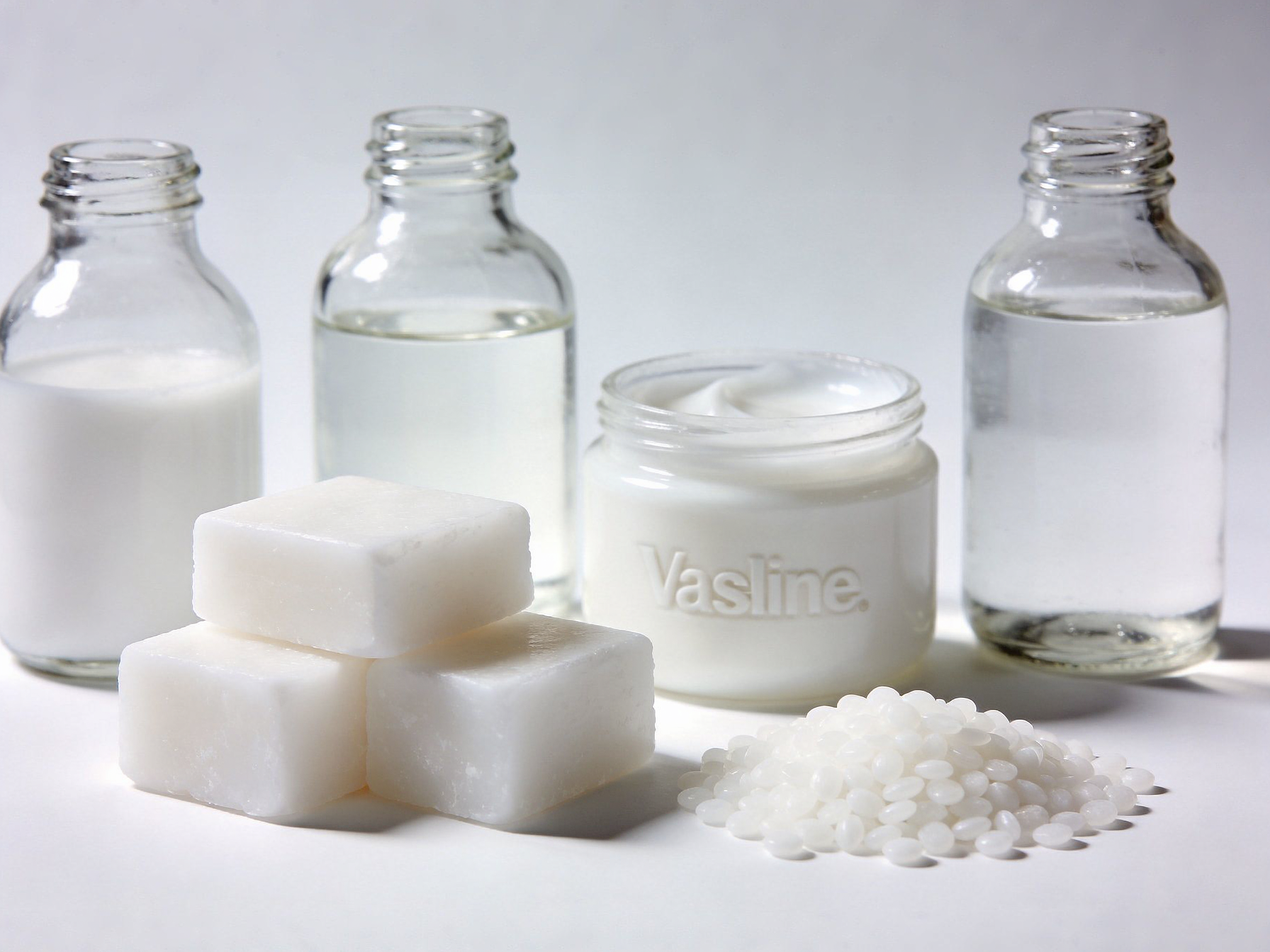
3.5 Pharmaceutical and Health‑Product Sector
Though dosage is small, BHT is indispensable in pharmaceuticals: ‑ Pharmaceutical formulation stabilizer: For lipid‑based topical preparations such as ointments, suppositories and creams, BHT prevents oxidative rancidity of bases and preserves efficacy and safety. Typical dosage: 0.01‑0.1 %. ‑ Soft‑gelatin‑capsule protection: Soft‑gel capsules contain glycerol and moisture and are susceptible to oxidative degradation. BHT improves capsule stability and protects encapsulated active ingredients. ‑ Vitamin formulation protection: Fat‑soluble vitamins (A, D, E, K) degrade easily in storage; BHT acts as an antioxidant safeguard for these nutrients. ‑ Veterinary applications: BHT is widely used in animal feed to protect fats and vitamins from oxidative deterioration during warehouse storage. The U.S. FDA permits up to 0.02 % BHT by weight in animal feed.
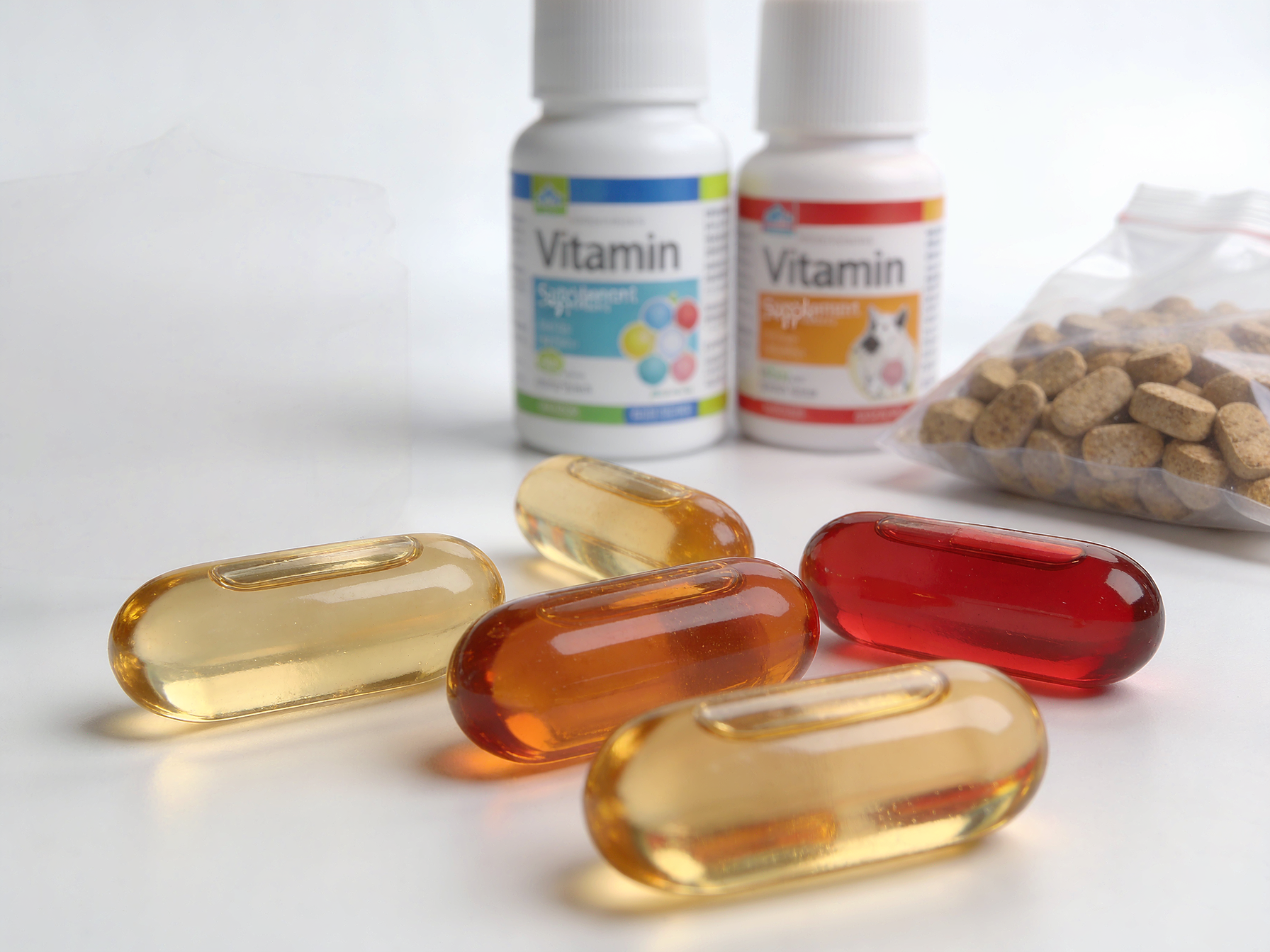
3.6 Food‑Packaging Materials: Invisible Protector via Indirect Contact
This is an easily overlooked but highly significant application.
‑ Plastic packaging films: BHT is incorporated into PE and PP food‑packaging films. It stabilizes the polymer itself against oxidative degradation and may slowly migrate onto food surfaces to provide extra antioxidant protection, notably for fatty foods such as cheese and butter.
‑ Paper coatings: Wax and plastic coatings on food‑contact paper contain BHT to prevent oxidation‑derived off‑flavors from migrating into food.
‑ Cap gaskets and sealing components: BHT added to rubber or plastic sealing gaskets retards aging‑induced seal failure and odor generation.
Migration of BHT from packaging into food has been extensively studied. Regulators worldwide enforce strict migration limits to ensure exposure remains within safe bounds.
3.7 Other Industrial Uses
Beyond major sectors, BHT serves many industrial scenarios:
‑ Inks and coatings: Prevent oxidative cross‑linking of binders that would alter viscosity and drying performance in inks; inhibit resin gelation in coatings.
‑ Adhesives: Preserve bonding performance of hot‑melt and pressure‑sensitive adhesives against oxidative deterioration during storage.
‑ Electronics industry: Added to soldering fluxes for printed‑circuit‑boards (PCBs) to protect sensitive components from oxidation during high‑temperature soldering.
‑ Textile industry: Improve thermal stability of synthetic fibers (nylon, polyester) during spinning and weaving.
‑ Pesticide industry: Stabilize active ingredients in certain pesticide formulations against storage‑time oxidation.
3.8 Summary of Application Landscape
|
Application Field |
Main Function |
Typical Dosage |
Main Products / Scenarios |
|
Food Industry |
Retard lipid rancidity |
0.01‑0.04 % |
Edible oils, fried foods, baked goods |
|
Cosmetics |
Antioxidation and stabilization |
0.01‑0.8 % |
Creams, lipsticks, perfumes |
|
Rubber Industry |
Anti‑aging agent |
0.1‑0.5 % |
Tires, rubber hoses, sealing parts |
|
Plastics Industry |
Processing stabilizer |
0.01‑0.1 % |
PE, PP, PS, ABS |
|
Lubricants |
Antioxidation |
0.3‑0.6 % |
Turbine oils, transformer oils, hydraulic oils |
|
Pharmaceuticals |
Formulation stabilization |
0.01‑0.1 % |
Ointments, soft capsules, vitamins |
|
Packaging Materials |
Indirect protection |
0.02‑0.1 % |
Food‑contact films, paper coatings |
|
Feed Industry |
Nutrient preservation |
≤ 0.02 % |
Livestock and aquafeed |
As illustrated above, BHT finds applications across nearly all industrial sectors requiring resistance to organic‑material oxidation. Its economic advantage (far cheaper than natural antioxidants), high efficiency and decades‑long industrial track record mean it will remain a key antioxidant for the foreseeable future.
IV. Brief Overview of Safety Controversies
Despite widespread adoption, safety debates persist.
Global regulatory positions diverge noticeably. The U.S. FDA lists BHT as GRAS (Generally Recognized As Safe). China and the EU permit limited‑dose use with ADIs of 0.3 mg/kg bw/day and 0.25 mg/kg bw/day respectively. Japan and Australia, by contrast, ban BHT in food.
Proponents note low acute toxicity (oral LD₅₀ in rats = 890 mg/kg), well‑characterized metabolic pathways, and lack of conclusive human‑health‑harm evidence since 1954 approval. Early U.S. National Cancer Institute (NCI) studies concluded BHT is non‑carcinogenic in rodent models.
Opponents point to animal studies showing liver‑enzyme induction and potential endocrine‑disrupting effects at high doses. A 15‑year German human biomonitoring study detected BHT metabolites in over 88 % of urine samples, with significantly higher exposure levels among children than adults. In 2021, the EU SCCS concluded that BHT poses no safety concern for cosmetics under existing limits yet flagged concerns regarding its endocrine‑disrupting potential.
Meanwhile, the “clean‑label” movement encourages consumers and manufacturers to prefer natural alternatives, creating long‑term market pressure on BHT.
V. Trends for Alternative Antioxidants
Natural antioxidants are capturing growing market share: their global market share reached approximately 38 % in 2025 and is projected to exceed 50 % by 2030. Major alternatives include vitamin E (comparable efficacy and higher perceived safety), rosemary extract (high‑temperature resistance), tea polyphenols and bamboo‑leaf antioxidants.
Nevertheless, natural alternatives face constraints including cost (typically 5‑20 times pricier than BHT), thermal stability and production capacity. BHT’s strengths in rubber, plastic and lubricant industrial applications cannot be easily replaced in the short‑to‑medium term. The likely future path favors synergistic “natural‑plus‑synthetic” compounded formulations rather than full replacement.
Conclusion
BHT is a synthetic antioxidant with seventy‑plus years of industrial history. It plays a vital role in extending food shelf‑life and maintaining performance of industrial goods. Featuring an elegant molecular structure and highly efficient antioxidant mechanism, it is deployed across nearly every corner of modern industry.
While safety debates continue, mainstream scientific authorities deem BHT safe when used within regulated dosage limits. The rise of natural antioxidants reflects consumer demand for more natural products, yet it does not mark the end for BHT; instead, it signals a new starting‑point for the whole antioxidant industry toward higher‑quality development.
Bridging science and public perception to enable informed consumer choices represents a rational stance toward such chemical substances. After all, no substance is perfect. Only prudent, science‑informed application allows technology to truly benefit human wellbeing.
 EN