
 EN
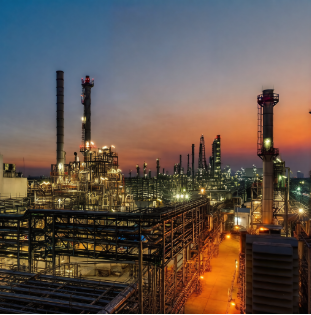
Chemical Plant Equipment Supply for Ethylene Oxide Production
Integration Requirements Between Catalytic Reactors and EO Plant Workflow
Chemical plant equipment supply for ethylene oxide production succeeds only when catalytic reactors are seamlessly integrated into the broader EO workflow. Reactor placement must accommodate feed preheating, recycle gas loops, and downstream quenching—since temperature and pressure fluctuations in one unit propagate rapidly across interconnected systems. A reactor skid should be designed for tie-in flexibility: nozzle elevations, instrument port spacing, and structural supports must align with existing pipe racks to avoid costly field modifications. Control integration is equally critical—distributed control system (DCS) signals for tube-skin thermocouples, flow transmitters, and emergency shutdown valves must use standard protocols and hardwired interlocks. Catalyst unloading requires lower manway access, while oxygen service demands dedicated purge connections. During turnaround, the reactor must isolate without depressurizing adjacent columns. Procurement teams often underestimate spatial constraints around catalyst handling platforms and crane access; early 3D model reviews with operations, maintenance, and instrumentation stakeholders help resolve clashes before fabrication. A pre-assembled reactor package can reduce site labor—but logistics complexity increases if transport routes encounter overhead obstructions. This front-end coordination lowers rework risk and supports stable ethylene oxide yield after startup.
Supply Chain Criticality: Lead Times, QA Protocols, and ASME Certification Compliance
Supply chain performance can make or break an EO reactor replacement. Lead times for heavy-wall forgings, tube sheets, and catalyst support grids routinely exceed 12–14 months, so procurement must begin during basic engineering. An effective purchasing strategy includes early vendor engagement, staged payments, and reserved mill capacity to mitigate schedule risk. QA protocols must enforce full material traceability, positive material identification (PMI), weld procedure qualification (WPQ), and 100% radiographic testing on all pressure-retaining seams. ASME Section VIII Division 1 or 2 (2023 edition) certification is mandatory for the pressure boundary—and EO service imposes stricter requirements due to oxygen compatibility and thermal cycling. Documentation packages must include U-stamp forms, heat treatment charts, hydrostatic test reports, and nonconformance dispositions. Incoming inspection verifies dimensional tolerances, nozzle orientation, and gasket surface finish before shipment. Supplier audits ensure subcontractors adhere to the same weld and non-destructive examination (NDE) standards. A single missing test certificate can delay mechanical completion and jeopardize startup. Alignment among engineering, procurement, and quality teams is therefore essential—not only for project delivery but for long-term reliability of critical chemical plant equipment supply.
Catalytic Reactor Design Specifications for EO Service
Silver/Alumina Catalyst Bed Configuration and Thermal Management Constraints
Ethylene oxide (EO) reactors rely on selective silver/alumina catalyst beds housed in multi-tubular fixed-bed vessels. Silver content typically ranges from 8% to 15% by weight: higher loading improves selectivity but may compromise mechanical stability. EO production is highly exothermic, making thermal management central to safe, efficient operation. Hot spots exceeding 275°C accelerate total combustion to CO₂ and shorten catalyst life. Operators generally limit temperature rise per pass to 40–60°C. Shell-side steam generation removes excess heat while maintaining precise tube wall temperature control. Tube diameters of 20–25 mm minimize radial temperature gradients to under 10°C. Uniform catalyst packing prevents flow maldistribution and localized overheating—uneven beds can create hot bands that force feed turndown or selective section shutdown. Modern chemical plant equipment supply contracts specify a maximum bed pressure drop of 0.3 bar and require in-situ catalyst activation support. Multiple thermocouples per tube sheet enable early detection of activity loss. If a hot band appears, operators reduce feed or isolate the affected section to prevent thermal runaway—these configuration and control limits directly support stable EO yield and extended catalyst service life.
Stainless Steel Tubes vs. Carbon Steel Shells: Corrosion Resistance and Thermal Expansion Mismatch Mitigation
EO reactors use stainless steel tubes and carbon steel shells for complementary reasons. Tubes made from 304H or 321H stainless resist oxidation and chloride stress corrosion cracking (SCC) at high-temperature, oxygen-rich tube-side conditions. Carbon steel shells provide cost-effective strength for pressurized steam generation—but corrode readily if boiler feedwater chemistry drifts or cooling water leaks occur. The primary mechanical challenge is differential thermal expansion: tube metal can run 50–80°C hotter than the shell during normal operation. Fixed tubesheet designs absorb this mismatch using expansion joints or shell bellows; larger temperature differentials may necessitate U-tube or floating-head configurations, increasing capital cost.
| Parameter | Stainless Steel Tubes | Carbon Steel Shell |
|---|---|---|
| Typical material | 304H or 321H | SA-516 Grade 70 |
| Main corrosion risk | Chloride pitting | Uniform corrosion and SCC |
| Thermal expansion | Higher | Lower |
| Mitigation method | Controlled tube pitch | Expansion bellows |
Materials must comply with ASME Section VIII Division 1 or 2 (2023 edition). Post-weld heat treatment is mandatory for thick carbon steel shells; stainless tubes require solution annealing after severe forming. Rolled and seal-welded tube-to-tubesheet joints allow limited axial slip. During commissioning, slow heating at 25–30°C per hour prevents joint overstress from differential expansion. Operators monitor shell and tube skin temperatures until steady state is achieved—if the temperature difference exceeds 50°C, the heat-up rate must be reduced or held. These design choices directly influence catalyst bed stability, safety margins, and turnaround frequency.
Performance Validation, Commissioning, and Chemical Plant Equipment Supply Assurance
Performance validation after mechanical completion confirms that the catalytic reactor meets operating targets before full EO production begins. For ethylene oxide plants, chemical plant equipment supply must include pre-startup checks that integrate reactor integrity, catalyst condition, and safety interlocks with the site’s formal start-up sequence. These checks establish the baseline for later measurements of capacity, selectivity, and utility consumption. Start-up teams review as-built pressure test reports, dry-out procedures, and control-loop response before introducing oxygen or ethylene. Gaps in documentation can delay commissioning and increase risk during the transition from inert to reactive service.
Pre-Startup Catalyst Activation and Oxygen Inerting Protocols
Pre-startup catalyst activation follows a staged, safety-critical sequence: nitrogen pressure leak checks, controlled heating of the catalyst bed, and gradual introduction of air or oxygen to condition silver surfaces. Reactor tubes are heated at no more than 30–50°C per hour to avoid thermal shock to the ceramic support. Oxygen concentration remains below the limiting oxygen concentration—typically 2–4 vol%—maintained via continuous nitrogen purge until temperatures stabilize. This protocol aligns with NFPA 400 (2023) guidance for unstable reactive gas handling. Inerting continues through first ethylene feed: the recycle loop circulates nitrogen, and oxygen levels are verified at multiple sample points before process gas admission. Control interlocks must block ethylene injection if oxygen exceeds the safe limit or if catalyst bed temperature deviates from the activation curve. After stable hot-loop performance is confirmed, operators incrementally raise oxygen while monitoring reactor outlet temperature and trace oxygen in the recycle gas. This sequence ties pressure-boundary integrity, catalyst activation, and safety system response directly to reliable, low-risk EO production.
FAQ Section
What is the importance of catalytic reactor integration in EO production?
Catalytic reactors must seamlessly integrate into the EO plant workflow to accommodate feed preheating, recycle gas loops, and temperature fluctuations. Proper integration minimizes costly reworks and supports stable EO yield.
Why are lead times crucial in EO reactor procurement?
Lead times for critical components like heavy-wall forgings and tube sheets can exceed 12–14 months, requiring early vendor engagement and procurement planning to avoid delays.
How does thermal expansion impact EO reactor design?
Differential thermal expansion between stainless steel tubes and carbon steel shells necessitates the use of expansion joints or alternate configurations to prevent joint overstress or failure during operation.
What tests are included in performance validation before EO production?
Pre-startup checks include nitrogen pressure leak tests, controlled catalyst heating, and verification of oxygen safety limits. These tests ensure integrity before introducing ethylene for EO production.
What materials are commonly used for EO reactor tubes and shells?
Stainless steel tubes, such as 304H and 321H, resist oxidation and chloride SCC, while carbon steel shells like SA-516 Grade 70 provide strength and cost-efficiency but require corrosion management.
Table of Contents
- Chemical Plant Equipment Supply for Ethylene Oxide Production
- Catalytic Reactor Design Specifications for EO Service
- Performance Validation, Commissioning, and Chemical Plant Equipment Supply Assurance
-
FAQ Section
- What is the importance of catalytic reactor integration in EO production?
- Why are lead times crucial in EO reactor procurement?
- How does thermal expansion impact EO reactor design?
- What tests are included in performance validation before EO production?
- What materials are commonly used for EO reactor tubes and shells?