
 EN
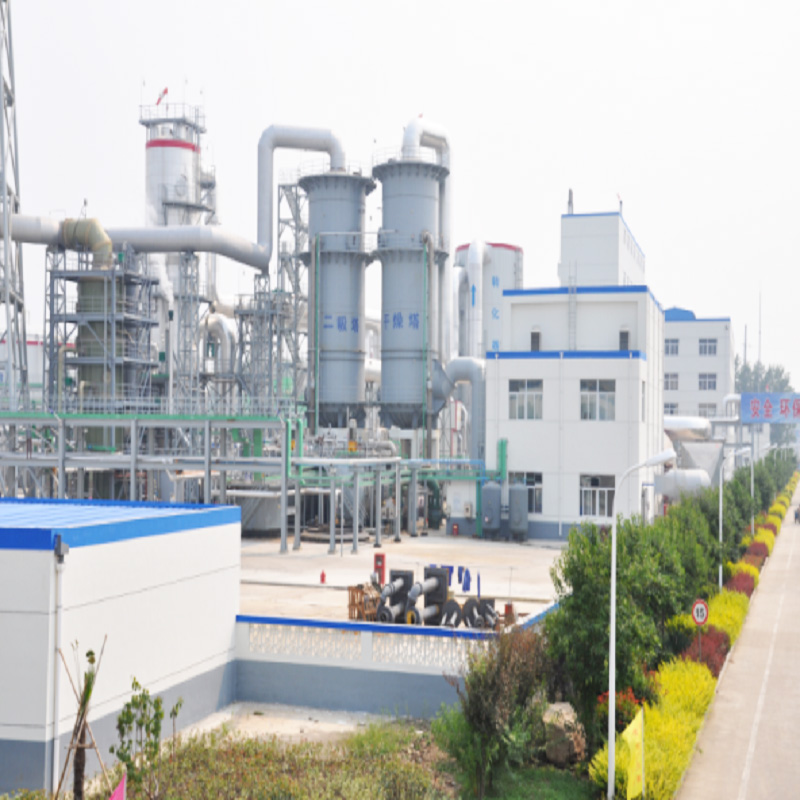
Why Skid-Mounted Modular Plant Design Is Critical for Paraformaldehyde Drying
Integrated Vacuum Rake Dryer Architecture on Standardized Skids
A skid-mounted modular plant for paraformaldehyde drying integrates the vacuum rake dryer, heating/cooling skid, vacuum pump, condensate receiver, and local control panel onto a single certified frame. Piping, wiring, and instrumentation are pre-connected and factory-tested—reducing field-erected interfaces and minimizing commissioning delays. Standardized skid dimensions also support repeatable lifting, transport, and placement—critical when facilities must deploy or relocate capacity rapidly.
Factory acceptance testing (FAT) verifies temperature uniformity, vacuum integrity, agitator torque, and interlock logic before shipment—unlike stick-built installations, where such checks occur late in the field and often uncover costly interface conflicts. Industry benchmarking shows modular construction can shorten project schedules by 20–50% and reduce total installed cost by ~20%. For paraformaldehyde drying—where formaldehyde-rich zones demand strict vapor containment, isolation, and controlled access during construction—this schedule compression delivers tangible safety and operational value.
The vacuum rake dryer operates as a horizontal, jacketed cylinder with a slow-turning agitator that continuously renews the product layer. Mounting it on a skid ensures precise alignment of the vacuum header, condensate drain, thermal fluid lines, and dust filtration system within a compact footprint. Engineers specify one integrated skid-mounted plant instead of coordinating multiple vendor packages—reducing interface errors and accelerating both initial deployment and future scale-up.
Material Compatibility and Corrosion Resistance in Formaldehyde-Rich Environments
Paraformaldehyde drying releases formaldehyde vapor and trace formic acid—especially under heat and moisture—both of which aggressively attack carbon steel, causing pitting and stress corrosion cracking if wetted components are improperly selected. A robust skid-mounted modular plant specifies corrosion-resistant alloys and non-metallic seals for all product-contact surfaces.
Austenitic stainless steels like 316L provide adequate resistance for dilute formaldehyde streams, but higher molybdenum alloys (e.g., Alloy 2205 or 254 SMO) are preferred where formic acid condensation is likely. PTFE or graphite gaskets, fluoropolymer-lined condensate piping, and glass-lined receiver surfaces isolate the vacuum system from corrosive carryover. As outlined in the 2021 Materials Selection Guide for Chemical Processing, molybdenum-bearing stainless steels maintain stable passive films in weak organic acid environments more reliably than standard 304 stainless—extending equipment life and reducing maintenance frequency.
Standardized skids also enable controlled shop fabrication of wetted components, improving weld quality and allowing full passivation before shipment. This significantly lowers the risk of field-initiated corrosion at crevices or heat-affected zones—delivering predictable uptime and lower total cost of ownership across paraformaldehyde drying campaigns.
Safety and Operational Efficiency Gains of the Skid-Mounted Modular Plant
A skid-mounted modular plant enhances safety and operational reliability by consolidating hazardous equipment into a pre-validated, enclosed footprint. The integrated vacuum rake dryer inherently limits fugitive dust and vapor emissions, while standardized control zones minimize operator exposure during routine operation and maintenance.
ATEX-Compliant Explosion-Proof Enclosure Design
Paraformaldehyde dust and residual formaldehyde vapor can form explosive atmospheres in the presence of oxygen and ignition sources. ATEX compliance requires coordinated enclosure, ignition source control, and ventilation strategies. In the modular platform, motors, local control panels, and junction boxes use flameproof or pressurized housings; intrinsically safe sensors monitor temperature, pressure, and oxygen levels around the dryer; and temperature class and gas group ratings are explicitly selected for formaldehyde vapor and paraformaldehyde dust. Bonding, grounding, pressure relief, and venting paths are factory-installed and verified. Inert gas blanketing further suppresses oxygen concentration inside the dryer enclosure.
Because classification and verification occur off-site under controlled conditions, hazardous-area boundaries are more precise and defensible than in field-built systems. Documented deployments of similarly configured modular skids in formaldehyde-handling applications report zero safety incidents in the first year—demonstrating consistent ignition control integrity without compromising operational continuity.
Reduced Commissioning Time and On-Site Integration Risk Mitigation
Skid modules arrive fully assembled, with piping, instrumentation, and controls pre-connected and tested. Site work focuses solely on utility tie-ins and inter-module connections—not field fabrication. Modular process skid benchmarks indicate installation and labor expenses drop by ~30% versus stick-built alternatives. Pre-commissioning tasks—including loop verification, pressure testing, and control signal validation—are completed before shipment, shifting technical risk away from the jobsite and reducing on-site labor exposure. Off-site assembly also minimizes worker hours in formaldehyde-hazard zones and eliminates many field wiring and piping misalignment risks. As a result, start-up transitions from months to days—with stable, validated operation achieved faster, fewer change orders, and minimal integration errors.
Regulatory Readiness and Scalability of the Skid-Mounted Modular Plant
GMP-Ready Layouts Supporting FDA/EMA Validation Protocols
Skid-mounted modular plants embed Good Manufacturing Practice (GMP) principles directly into their standardized layouts: defined material flow paths, cleanable surfaces, segregated utility routing, and pre-configured instrumentation all align with FDA and EMA validation expectations. Because alarms, batch records, and control logic are factory-integrated, validation teams focus on installation and operational qualification—not custom system re-engineering. The standardized footprint also enables seamless scale-out: adding identical skids replicates the validated design, substantially reducing revalidation scope and timeline. This repeatable, documentation-ready approach shortens time-to-compliance while reinforcing data integrity and audit readiness.
From Batch to Continuous: Evolution and Future-Proofing of Skid-Mounted Modular Plant Systems
The industry shift toward continuous paraformaldehyde drying is accelerating—and skid-mounted modular plants provide the most agile path forward. Unlike traditional civil-based expansions, modular systems allow reconfiguration without structural modification and capacity growth via parallel skid addition. According to 2023 industry data, modular processing systems cut project timelines by 20–40% compared with stick-built plants—compressing the window needed for process qualification and regulatory review.
This evolution hinges on vacuum rake dryer skids equipped with continuous feed and discharge ports, enabling precise residence time control without equipment replacement. Process analytical technology (PAT) and real-time moisture monitoring further enable closed-loop adjustments to jacket temperature, vacuum level, and rake speed—supporting consistent, data-driven operation. Future-proofing is built in: pre-piped utility headers, standardized control buses (e.g., Profibus, Ethernet/IP), and reserved skid slots allow operators to evolve from pilot batch runs to full-scale continuous production—without replacing the core drying skid. This modular strategy lowers revalidation risk, reduces environmental impact from repeated construction, and preserves capital for responsive capacity upgrades aligned with market demand.
Frequently Asked Questions (FAQ)
What is a skid-mounted modular plant?
A skid-mounted modular plant is a prefabricated system that integrates essential processing equipment onto a single certified frame. All components, including piping, wiring, and instrumentation, are pre-connected and factory-tested.
Why is material compatibility important for paraformaldehyde drying processes?
Paraformaldehyde drying releases corrosive substances like formaldehyde vapor and formic acid, which can damage carbon steel and other materials. Choosing corrosion-resistant alloys and seals ensures equipment durability and reduces operational risks.
How does skid-mounted modular construction reduce costs and time?
By pre-assembling and factory-testing all components, skid-mounted modular construction minimizes site work and commissioning time. Industry benchmarks show project schedules can be shortened by 20–50% and costs reduced by around 20%.
What safety benefits do skid-mounted modular plants offer?
Skid-mounted plants consolidate hazardous equipment into enclosed, ATEX-compliant footprints, reducing operator exposure and ensuring precise hazardous area classifications. This leads to improved safety and operational reliability.
Are skid-mounted modular plants GMP-ready?
Yes, skid-mounted modular plants are designed to comply with Good Manufacturing Practice (GMP) standards, aligning with FDA and EMA validation protocols. Their standardized and cleanable layouts make validation more efficient and enhance audit readiness.
How do skid-mounted modular plants support scalability?
The standardized design of skid-mounted modular plants allows for seamless capacity expansion and system reconfiguration by adding identical skids without major structural modifications or revalidation requirements.
Table of Contents
-
Why Skid-Mounted Modular Plant Design Is Critical for Paraformaldehyde Drying
- Integrated Vacuum Rake Dryer Architecture on Standardized Skids
- Material Compatibility and Corrosion Resistance in Formaldehyde-Rich Environments
- Safety and Operational Efficiency Gains of the Skid-Mounted Modular Plant
- Regulatory Readiness and Scalability of the Skid-Mounted Modular Plant
- From Batch to Continuous: Evolution and Future-Proofing of Skid-Mounted Modular Plant Systems
-
Frequently Asked Questions (FAQ)
- What is a skid-mounted modular plant?
- Why is material compatibility important for paraformaldehyde drying processes?
- How does skid-mounted modular construction reduce costs and time?
- What safety benefits do skid-mounted modular plants offer?
- Are skid-mounted modular plants GMP-ready?
- How do skid-mounted modular plants support scalability?