
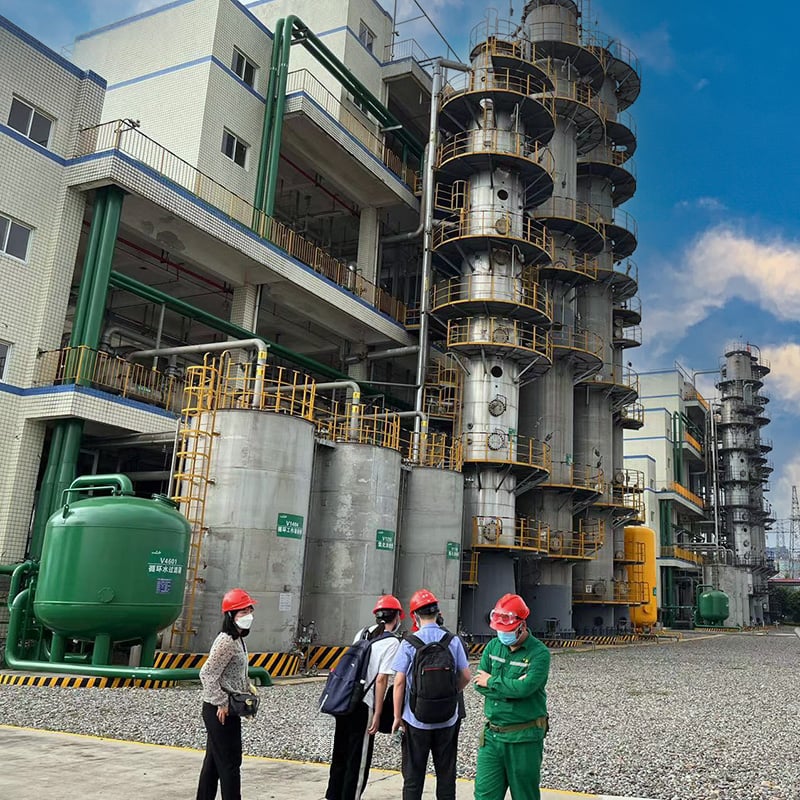
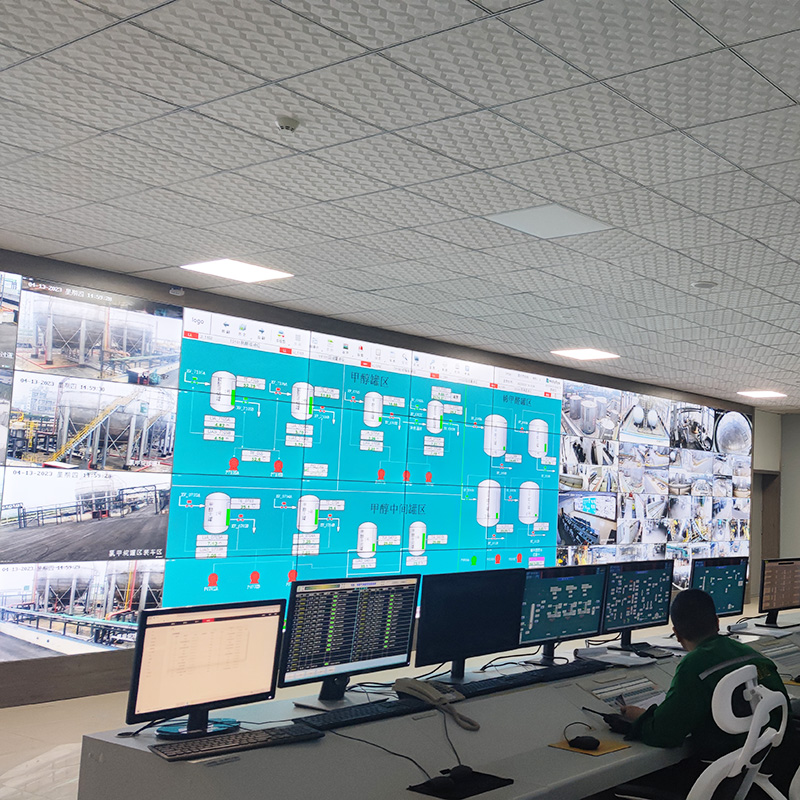
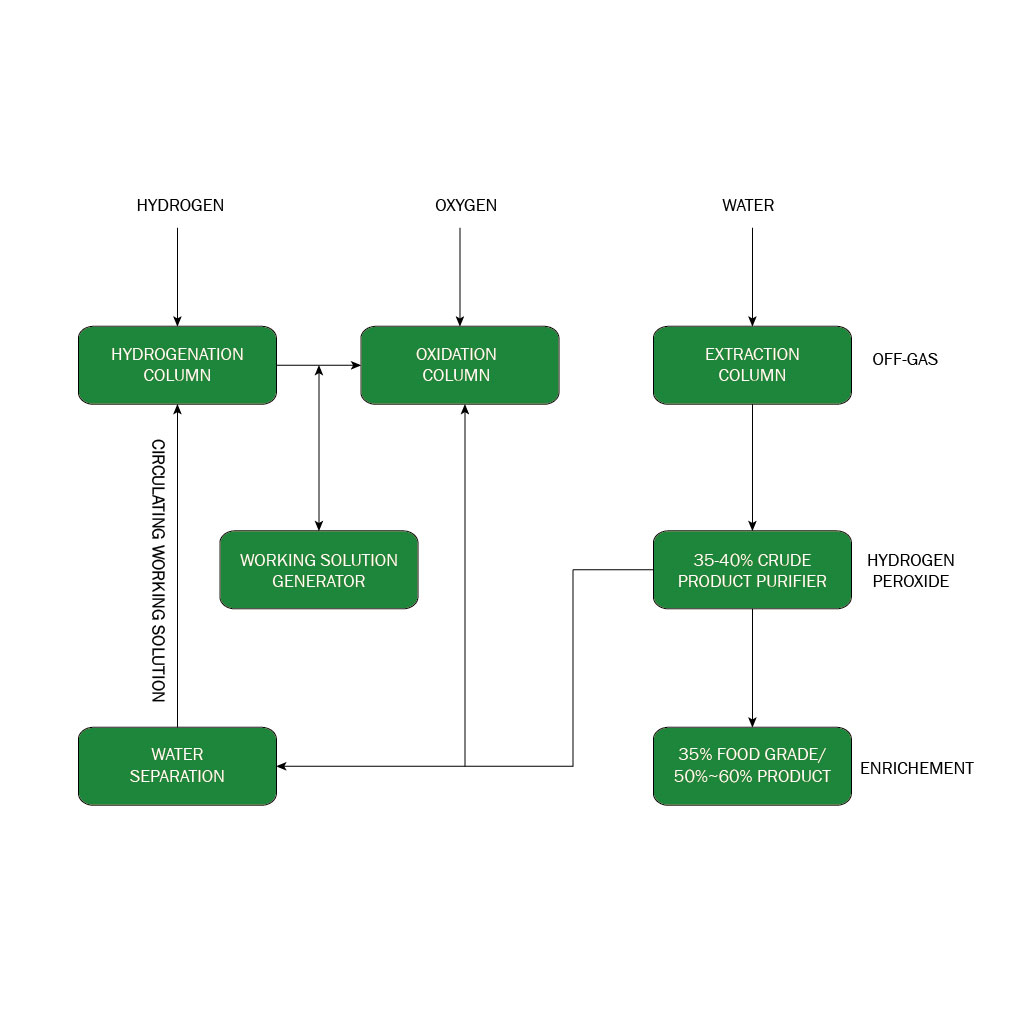
Recycling Mechanism
Anthraquinone and Solvent Recycling: Anthraquinone acts as a hydrogen carrier, and the solvent system (e.g., heavy aromatics + trioctyl phosphate) serves as the medium. Both are regenerated and reused after hydrogenation, oxidation, and extraction, with only hydrogen (H₂) and oxygen (O₂) consumed.
Closed-Loop System: Material utilization exceeds 95%, significantly reducing raw material costs.
Multi-Step Collaborative Process
Hydrogenation-Oxidation-Extraction-Purification: A well-defined four-step process with mild operating conditions, enabling precise control.
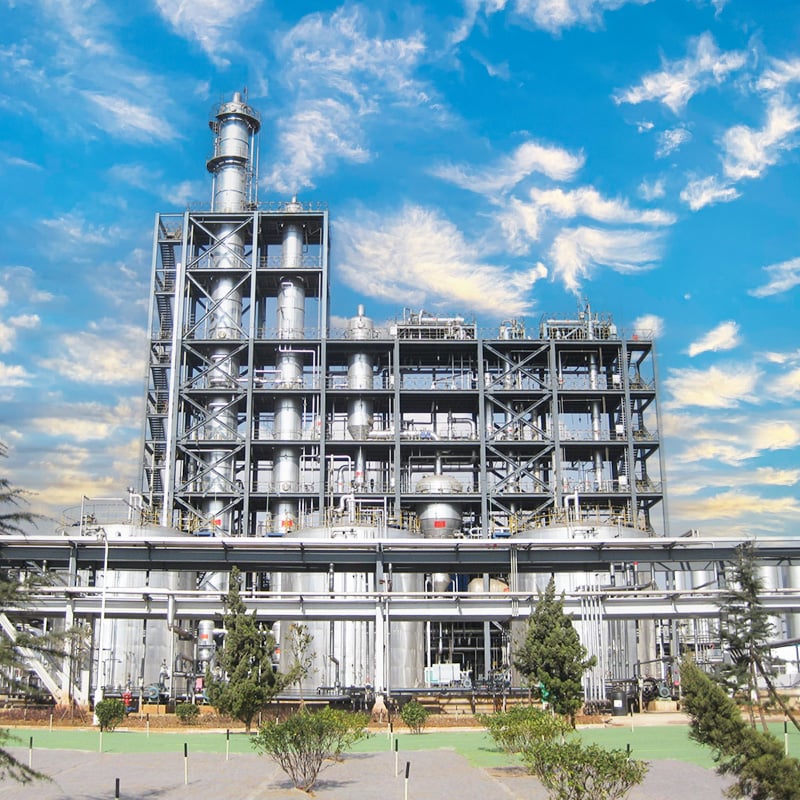
Continuous Production: Suitable for large-scale industrialization, with capacity reaching tens of thousands of tons annually.
Critical Material Dependence
Catalysts: Palladium (Pd) or nickel (Ni) catalysts are central to reaction efficiency and cost.
Solvent System: Requires properties such as anthraquinone solubility, H₂O₂ stability, and oxidation resistance (traditional solvents include aromatic hydrocarbons + phosphate esters).
Safety and Environmental Challenges
Risk Control: Avoids high temperatures, metal ion contamination (which catalyzes H₂O₂ decomposition), and requires treatment of wastewater containing trace H₂O₂.
Solvent Recovery: Minimizes VOC emissions through distillation and adsorption systems.
Core Advantages
High Efficiency and Cost-Effectiveness
Low Energy Consumption: Mild reaction conditions (50–80°C, 0.2–0.3 MPa), far more efficient than the high energy demands of electrolysis.
High Conversion Rate: Anthraquinone recycling and efficient hydrogen utilization reduce overall costs to 1/3–1/2 of traditional methods.
Product Purity and Stability
High-Purity H₂O₂: Multi-stage extraction and ion-exchange resin purification ensure minimal impurities (metal ions, organics).
Stabilizer Additives: Phosphoric acid or stannate additives inhibit H₂O₂ decomposition, extending shelf life.
Scalability and Maturity
Industrial Maturity: Over 95% of global H₂O₂ production uses the anthraquinone process, with standardized technology and equipment.
Flexibility: Adjustments to solvent ratios and catalyst loading enable adaptation to varying production needs.
Environmental Friendliness
Low Pollution: Solvent recovery reduces VOC emissions; wastewater is treated via catalytic decomposition.
Resource Circularity: Only H₂ and O₂ are consumed, aligning with green chemistry principles.
| Item | Index | |||||
| 27.5% | 35% | 50% | 60% | 70% | ||
| Superior grade | Conformed grade | |||||
| HP purity (wt%) | 27.5 | 27.5 | 35.0 | 50.0 | 0.025 | 70 |
| Free acid (as per H₂SO₄) (wt%) | 0.040 | 0.050 | 0.040 | 0.040 | 0.040 | 0.040 |
| Non-volatile matter (wt%) | 0.08 | 0.10 | 0.08 | 0.08 | 0.06 | 0.06 |
| Stability (%) | 97.0 | 90.0 | 97.0 | 97.0 | 97.0 | 97.0 |
| Total carbon (as per C) (wt%) | 0.030 | 0.040 | 0.025 | 0.035 | 0.045 | 0.050 |
| Nitrate (as per NO₃ ) (wt%) | 0.020 | 0.020 | 0.020 | 0.025 | 0.028 | 0.035 |
| Note: Total carbon and nitrate are non-obligatory requirements, while other items are obligatory | ||||||
Acetic Acid Plant
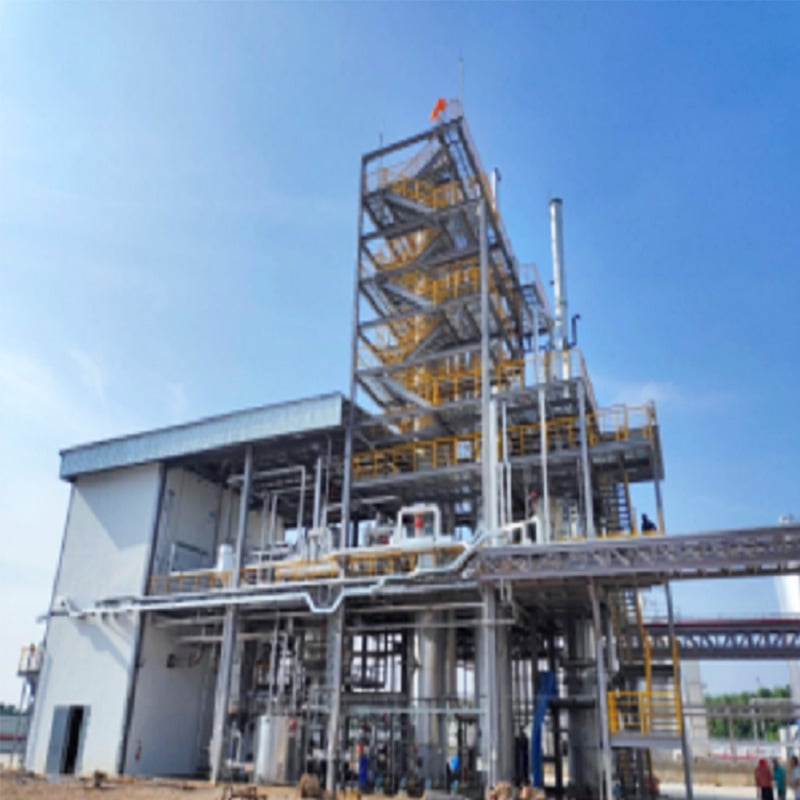
Urea Formaldehyde Plant
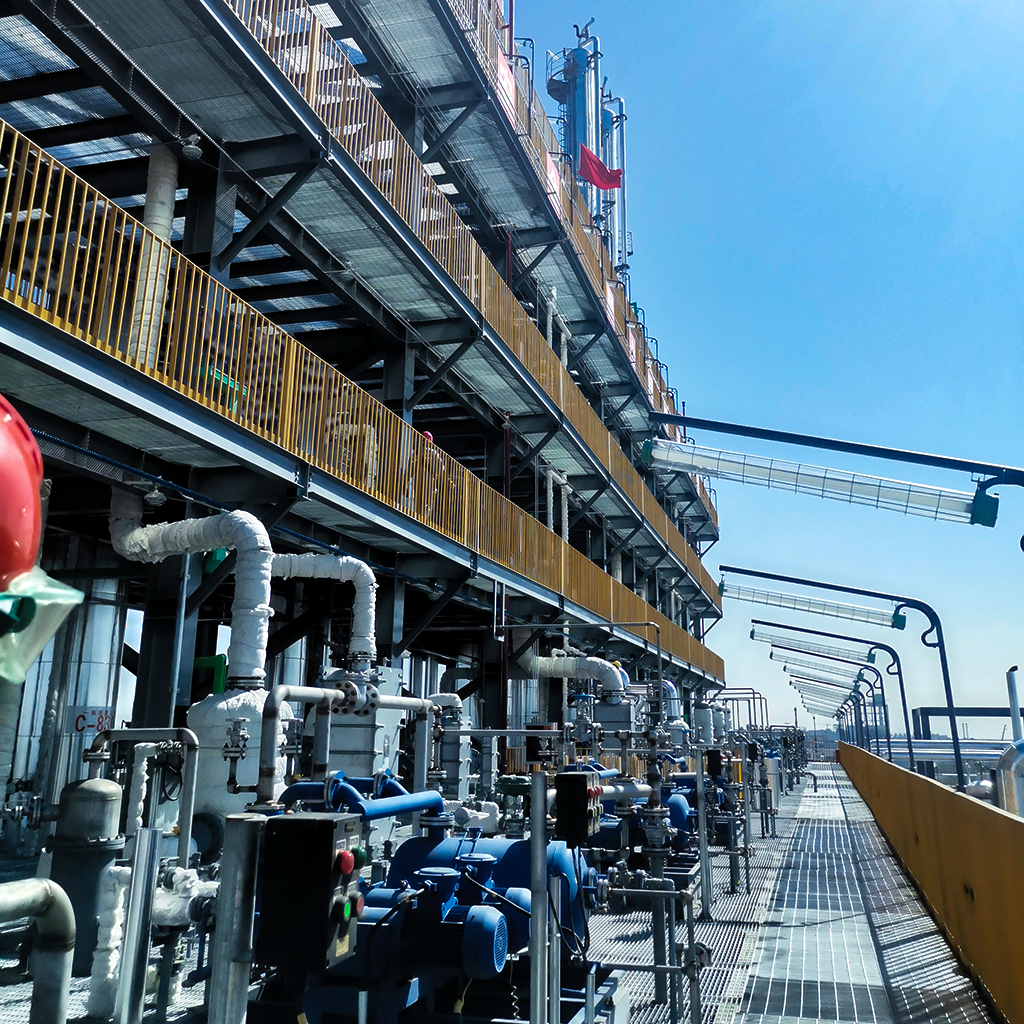
MMA (Methyl Methacrylate) Plant
Methylamines Plant
 EN
EN