
 EN
EN
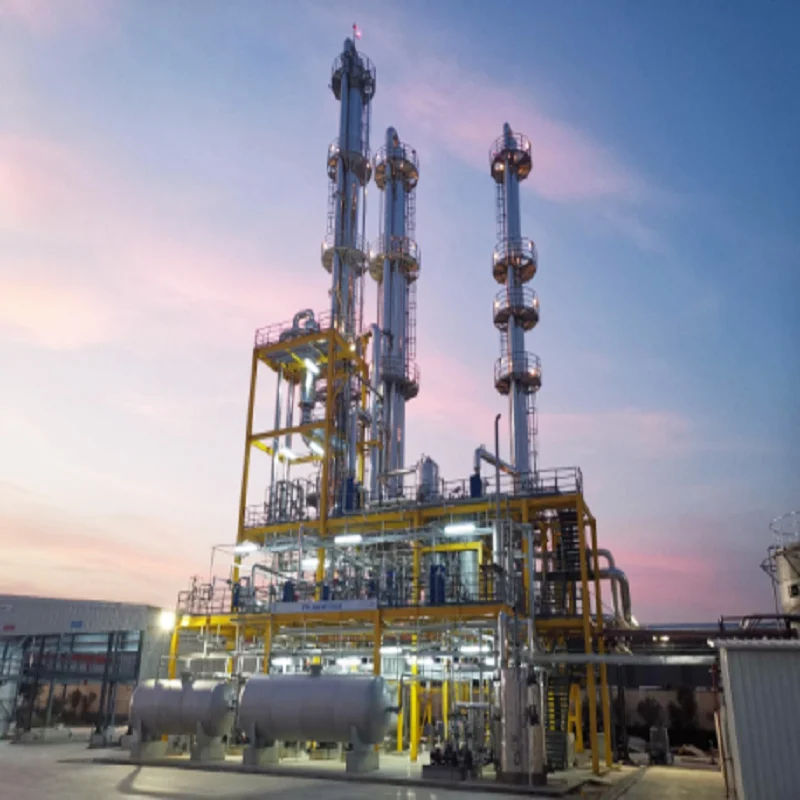
The Evolution of Modern Chemical Processing
The global formaldehyde industry is currently facing unprecedented pressure to enhance production efficiency, minimize material waste, and improve output consistency. For decades, traditional batch production has been the industry standard; however, in a 2026 industrial landscape defined by fierce competition and increasingly stringent environmental regulations, the fundamental limitations of batch methods have become impossible to ignore. Transitioning a paraformaldehyde plant from a batch-based setup to a continuous flow system represents far more than just a standard technical upgrade—it serves as a crucial strategic evolution for chemical manufacturers determined to maintain their competitive edge in a rapidly changing global market.
The Operational Bottlenecks of Traditional Batch Production
Operational experience across various chemical plants confirms that batch production is consistently plagued by inherent, deep-seated inefficiencies. Each individual batch cycle requires time-consuming charging, reaction, filtration, and drying phases, during which the system must be repeatedly started and stopped. This cyclical, intermittent nature inevitably leads to significant "dead time" and numerous human intervention points, which inherently introduce potential quality variations between one batch and the next. Furthermore, thermal management within a massive batch vessel is notoriously difficult to control; localized heating or cooling hotspots often lead to uneven polymerization, resulting in inconsistent molecular weight and overall product purity. These inefficiencies not only inflate labor costs but also result in massive energy wastage, as the entire system must be brought up to operating conditions from ambient state repeatedly for every single run.
Technical Advantages of Continuous Processing
Continuous polymerization for paraformaldehyde transforms the core production philosophy from a cyclical, stop-start process to a stable, steady-state operation. By utilizing an automated, closed-loop continuous flow reactor, manufacturers can maintain consistent temperature and pressure profiles throughout the entire duration of the production cycle. Modern advanced process control systems now allow for the real-time monitoring of delicate reaction kinetics, ensuring that every kilogram of product leaving the line meets exact, rigorous specifications. This continuous approach utilizes high-precision feeding systems and sophisticated heat exchangers that maximize reaction efficiency at every stage. By stabilizing the polymerization process, the facility can achieve a significantly higher throughput without the need for massive, disruptive increases in the plant’s physical footprint, ultimately allowing for a much more compact, reliable, and manageable production layout.
Improving Product Quality and Sustainability Metrics
Sustainability is no longer an optional corporate goal; it has become a critical metric for long-term operational success. Continuous processing excels in environmental stewardship by drastically minimizing the creation of off-specification material. Because the system runs in a stable, optimized state, the likelihood of chemical waste is reduced to a minimum. Furthermore, modern continuous setups integrated with advanced vapor recovery systems significantly minimize the emission of volatile organic compounds, ensuring total compliance with tightening global environmental standards. Energy efficiency is similarly enhanced through continuous heat recovery, where the energy generated from exothermic reactions is repurposed to preheat incoming raw material feeds. This holistic approach to efficiency means that producers can lower their energy consumption per ton of paraformaldehyde, directly improving the financial bottom line while simultaneously reducing the carbon footprint of their daily operations.
SL-TECH: Engineering Excellence in Process Revamps
Transitioning an existing facility from a legacy batch process to a high-efficiency continuous system is a sophisticated engineering task that demands deep, specialized technical expertise in process intensification and seamless system integration. SL-TECH specializes in the comprehensive revamping of complex chemical production lines, ensuring that every transition is backed by rigorous process simulation, structural integrity analysis, and precise control automation. With extensive experience in designing and upgrading chemical reaction systems across multiple regions, SL-TECH provides tailored solutions that address the specific throughput and quality goals of every individual plant operator. By leveraging deep knowledge in material science and plant automation, SL-TECH effectively removes the technical uncertainty and operational risk from complex process revamps. Whether through optimizing existing reactor designs or implementing fully integrated, continuous-flow turn-key systems, SL-TECH ensures that chemical plants operate at their absolute peak potential, providing a robust, reliable foundation for long-term scalability and market dominance.
A Strategic Move for the Future-Focused Chemical Plant
The shift to continuous production is a decisive, bold step toward future-proofing an industrial facility. By replacing intermittent batch cycles with a robust, automated flow, manufacturers can finally unlock levels of quality control, safety, and energy efficiency that were previously considered impossible. As the market continues to evolve, the ability to deliver consistent, high-purity paraformaldehyde while adhering to strict environmental standards will determine the longevity and success of any major chemical enterprise. Investing in process modernization is not merely about updating hardware; it is about adopting a more intelligent, stable, and highly profitable operational strategy that positions an enterprise for lasting success in the decade ahead.
Table of Contents
- The Evolution of Modern Chemical Processing
- The Operational Bottlenecks of Traditional Batch Production
- Technical Advantages of Continuous Processing
- Improving Product Quality and Sustainability Metrics
- SL-TECH: Engineering Excellence in Process Revamps
- A Strategic Move for the Future-Focused Chemical Plant